
People usually search “French drain vs channel drain” after getting tired of the same problem again and again.
The confusing part is that two homes can have completely different water problems. But they can look almost the same from the outside.
Here, one may have water trapped deep under the soil. Another may simply have rainwater with nowhere to go after a heavy rain. That is why some drains work perfectly for one and fail badly in another home.
However, the real solution is not choosing the “best” drain. You should understand what kind of water your house is actually dealing with.
And this is more common than many people realize. According to the International Association of Certified Home Inspectors (InterNACHI), nearly 98% of basements in the United States experience some type of water damage during their lifespan.
That is why many start comparing French drain vs channel drain systems and try to fix the water problems of their homes.
French Drain vs Channel Drain: Quick Comparison
At first, both options seem very similar to one another. But once you compare how they handle water and what type of problem they solve, then the difference becomes very clear. Like-
| Feature | French Drain | Channel Drain |
| Handles | Underground moisture | Surface rainwater |
| Installed | Below ground | Ground level |
| Best For | Wet yards, foundation moisture | Garages, patios, walkways |
| Visibility | Mostly hidden | Visible grate |
| Water Type | Slow-moving groundwater | Fast surface runoff |
| Maintenance | Moderate | Easier |
| Installation Cost | Higher | Lower |
| Common Location | Around foundations | Across concrete surfaces |
Both systems help protect a property from water damage. They simply solve different kinds of water problems.
What Is a French Drain?
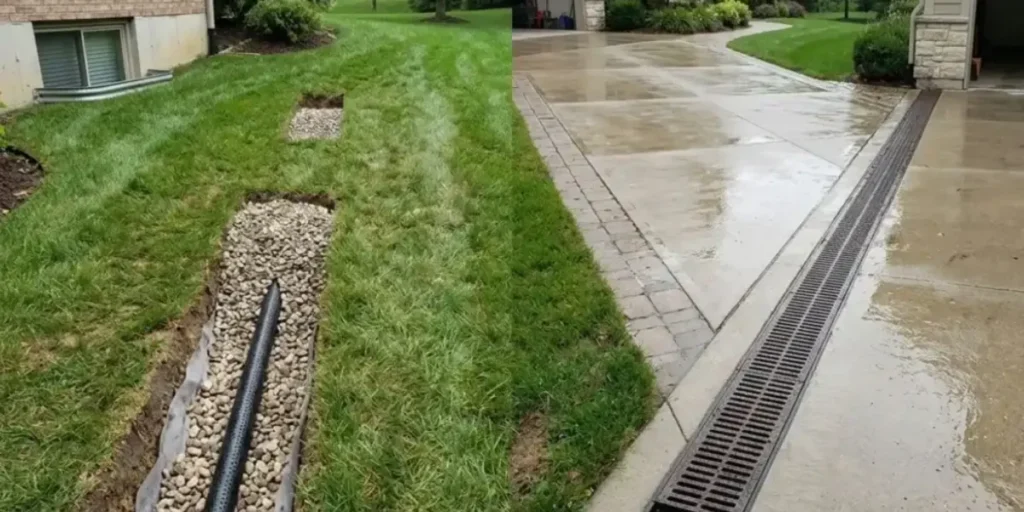
A French drain is an underground water control solution. This drain is made with a narrow trench, gravel, and a pipe. These pipes have small openings as well.
As moisture builds up in the soil, the water slowly enters the pipe and flows away from the house, backyard, or property.
French drains are commonly set up:
- around foundations,
- beside basements,
- near retaining walls,
- or in parts of the yard that stay wet after rain.
One reason many people choose French drains is that the setup stays mostly underground. And from the surface, you may barely notice it is there. But underneath, it quietly helps keep excess moisture away from the home.
Signs You May Need a French Drain
Sometimes, the early signs are small and easily you may overlook. But over time, extra water in the property can be a bigger moisture problem. Here are some common Warning Signs:
- Wet grass that stays soggy for days
- Muddy areas in the yard after rain
- Damp basement walls
- Water is collecting near the foundation
- Standing rainwater that does not drain away
- Soil is slowly washing away around the property
What Is a Channel Drain?
A channel drain is a long, narrow drain set up above ground with a grate covering the top. In fact, its job is to catch water moving quickly across the ground before it starts collecting in unwanted areas, like puddles!
You will see channel drains:
- in front of garages,
- around pools,
- beside patios,
- near outdoor walkways,
- or across concrete surfaces.
Unlike French drains, channel drains are for fast-moving rainwater above the ground. They work especially well in places where pavement prevents water from soaking naturally into the soil.
Signs You May Need a Channel Drain
Problems like water above the ground usually become visible at first sight. Here are some common signs that are just right for a channel drain:
- Water is collecting near the garage entrances
- Rainwater spreading across patios
- Slippery outdoor walkways
- Water is flowing back toward the house
- Flooding near concrete surfaces
Channel Drain vs French Drain: Which One Works Better?
There is no single option that works best for every home. Rather, the right choice depends on where the water problem begins.
A French Drain Is Usually Better If:
- The ground stays constantly wet,
- Basement moisture keeps returning,
- water gathers near the foundation,
- Or the soil stays soft for days after rain.
Or A Channel Drain Is Usually Better If:
- rainwater moves across the surface,
- water collects quickly during storms,
- runoff flows toward structures,
- or paved areas cannot drain properly.
Basement Channel Drains vs French Drain
Many people compare basement channel drains vs. French drain setups when trying to solve basement moisture problems. To be honest, both help protect the basement. But they work differently.
A summary for your understanding-
| Basement Water Solution | Main Purpose |
| French Drain | Move the groundwater away from the outside |
| Channel Drain | Catch water inside the basement |
| Combined Setup | Handle severe moisture problems |
French Drain vs Channel Drain Cost
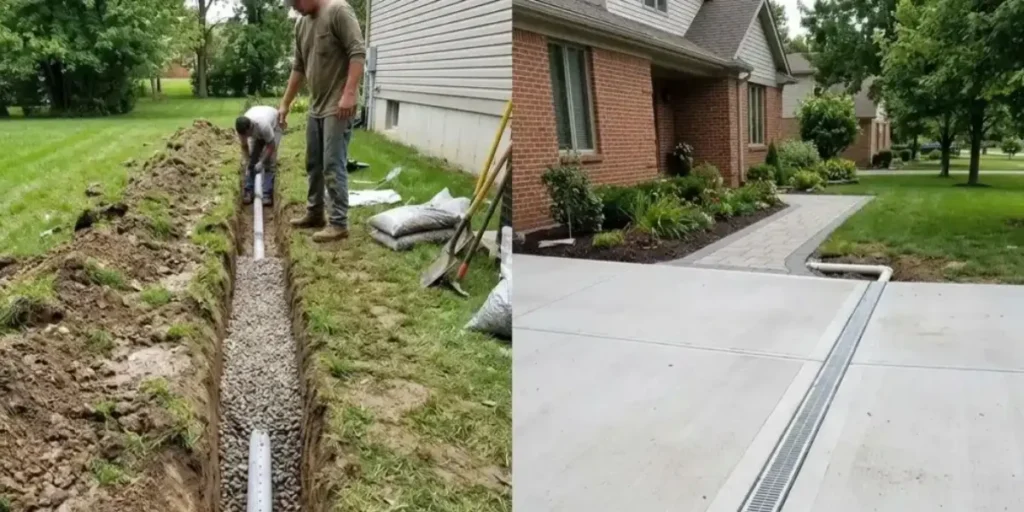
In general, channel drains are usually less expensive. As they are installed near the surface. On the other hand, French drains often cost more. The reason behind this is that to install it, you need digging, gravel, underground pipes, and extra yard work.
The final price can vary from property to property. However, here is a general idea:
| Option | Average Cost Range |
| French Drain | $2,000–$8,000+ |
| Channel Drain | $500–$3,500+ |
How Long Do These Systems Last?
A properly installed water control solution can last for many years. In fact, the lifespan usually depends on installation quality, soil condition, and some other things.
| System | Average Lifespan |
| French Drain | 15–30 years or more |
| Channel Drain | 10–20 years or more |
In many situations, proper installation matters more than the drain itself, and even a high-quality setup may fail early if water is not directed correctly.
While channel drains are a popular solution for managing surface runoff, they are not the only linear drainage option. If you’re comparing other surface drainage systems, see our guide on French Drain vs Trench Drain to understand how trench drains differ in design, installation, and performance.
Common Mistakes People Make
Many water problems get bad because people:
- choose the wrong solution,
- ignore small warning signs,
- delay repairs too long,
- or only fix the visible water without solving the real cause.
According to the Environmental Protection Agency (EPA), poor water control around foundations is one of the leading causes of moisture damage in buildings. That is why early action matters.
Final Thoughts on French Drain vs Channel Drain
When you compare French drain vs channel drain systems, the most important thing that you have to understand is where the water is coming from.
Where French drains are for underground moisture problems, on the other hand, channel drains are for rainwater moving across the ground.
However, both can work extremely well when you set them up correctly. And in some properties, using both together creates the strongest long-term solution for controlling excess water around the home.
If water keeps collecting around your property after rain, fixing the issue early can help prevent much larger repair costs later.
FAQs
Which option works best near garages?
Channel drains are usually better near garages because they quickly collect water moving across the surface.
Do French drains help with basement water problems?
Yes. French drains help move groundwater away from the house and lower the risk of moisture.
How long does a French drain last?
A professionally installed French drain can last 15–30 years or even longer with proper maintenance service.