
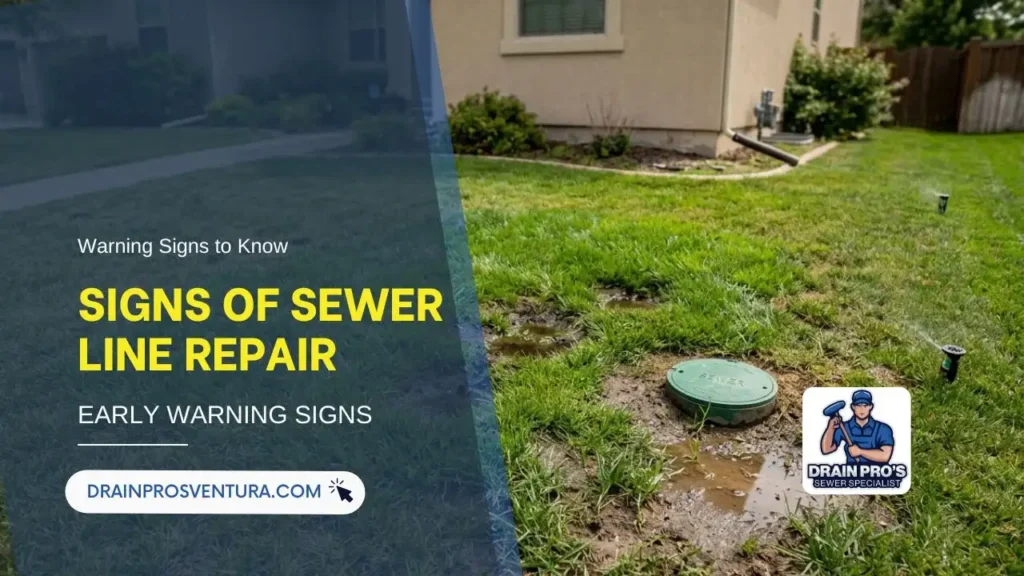
Most people do not think about their sewer line until something goes wrong, right?
Maybe you see bubbles in the toilet after flushing. Or maybe a strange smell appears near the yard after rain. And sometimes the shower drains more slowly every week.
And you ignore it, thinking maybe it’s not a big deal. In fact, that is how many underground plumbing problems begin. The difficult part is that sewer lines stay hidden beneath the property for a long time, and no one understands it.
So damage often grows before people realize something serious is happening. Learning the early signs your sewer line needs repair can help prevent expensive pipe damage, water problems, and many other things.
Common Signs Sewer Line Repair Problems Are Starting
A sink clog usually affects one drain. But the sewer line problem affects many parts of the house together because it connects the entire plumbing system of a house.
That is why the warning signs can slowly extend throughout the property.
Here are some of the most common signs your sewer line needs repair:
| Warning Sign | What It Could Mean |
| Several drains become slow together | Main sewer line blockage |
| Bubbling toilets | Air trapped inside sewer pipes |
| Sewage smell indoors or outdoors | Possible sewer line leak |
| Dirty water is backing up | Sewer line blockage |
| Wet or soft yard spots | Underground sewer damage |
| Repeated plumbing clogs | Broken or damaged sewer line |
According to the Environmental Protection Agency (EPA), grease, roots, debris, wipes, and buildup are common causes of sewer barriers in housing plumbing systems.
Slow Drains Around the House
This is one of the earliest signs of sewer line problems.
You may notice:
- Sinks are taking longer to empty
- Toilet flushing weakly
- Standing water near floor drains
- Shower water gathering around your feet
At first, many ignore these signs because the water eventually goes down anyway.
But slow drainage often becomes worse over time instead of improving at all.
Bad Smells Coming From the Yard
You should not ignore a sewage smell inside or outside the home.
Many of us first try cleaning the sink. Some people even use air fresheners. But the real issue is underground. Here, this can become one of the strongest signs of a sewer line leak or underground pipe damage.
You may notice:
- Sewage smell near drains
- Musty odors inside bathrooms
- Unpleasant smell in the basement
- Bad smell outside near the yard
- Sewer odor after rain
Bubbling Toilets Sounds
A good plumbing system does not create any sound. But if your toilet bubbles after flushing. Or the sink makes gurgling sounds, which can be one of the common signs of a clogged sewer line.
Water Backing Up Through Other Drains
This is where sewer problems become more serious. Like,
- Using the washing machine affects nearby drains
- Dirty water comes back through floor drains
- Wastewater rises through another sink
This is one of the strongest signs of sewer line blockage. At this stage, professional sewer inspection becomes very important.
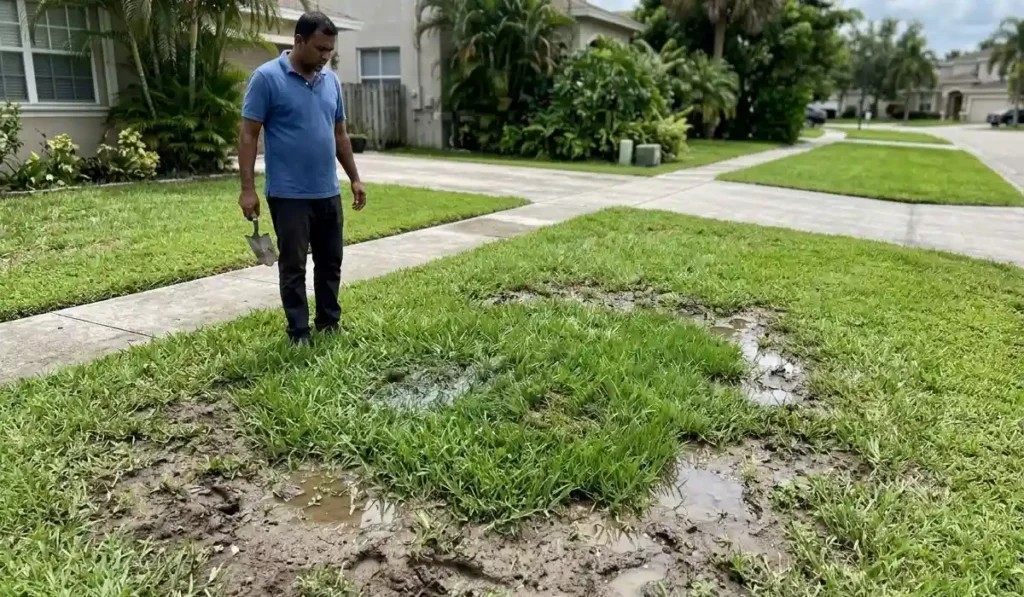
Wet Grass or Soft Yard Areas
Not every sewer problem starts indoors. Sometimes the first warning signs can be outside of the house. If you see one area of the yard suddenly becomes wetter or softer than the other sides of the ground, wastewater may already be leaking underground.
This can become one of the major signs of sewer line damage.
Frequent Clogs That Keep Returning
One clog every once in a while is normal. But when clogs continue returning after temporary fixes, the issue may go deeper than a simple blockage. This can become one of the signs of a broken sewer line.
Many homeowners repeatedly use drain cleaners hoping the issue disappears. Unfortunately, the clog often returns because the real damage still exists underground.
| Cause | What Happens Over Time |
| Tree roots | Pipes crack and flow becomes blocked |
| Grease buildup | Wastewater moves slower |
| Old pipes | Pipe walls weaken |
| Soil shifting | Underground pipes move or crack |
| Flushable wipes | Sewer blockages slowly grow |
| Pipe corrosion | Wastewater leaks into the soil |
The EPA also warns that “flushable” wipes still create serious sewer blockages, especially inside older plumbing systems.
Signs of a Collapsed Sewer Line & why it happens
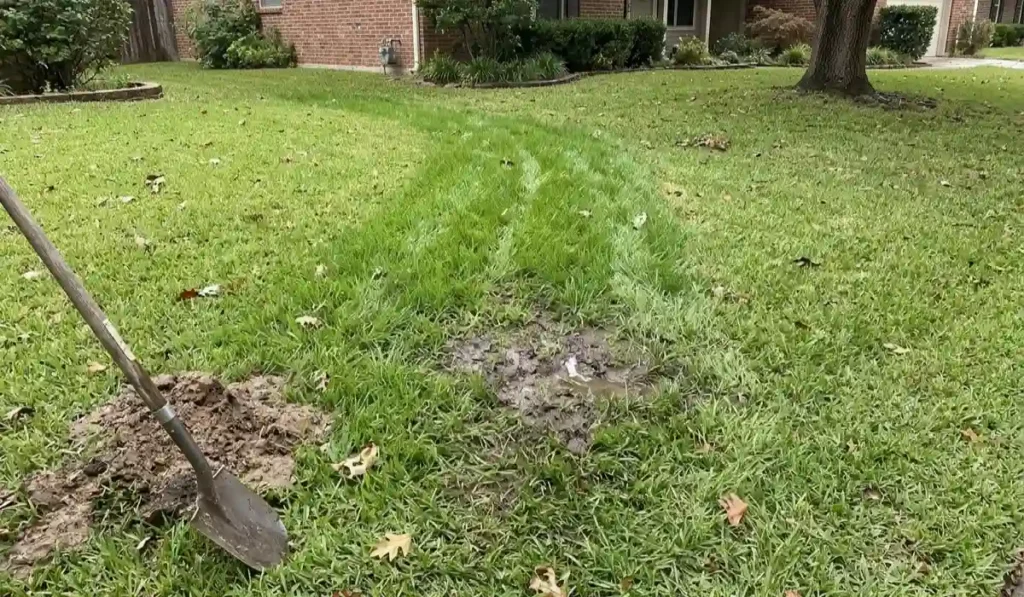
A collapsed sewer line is more serious than a normal clog in your house. It means part of the underground pipe has broken, sunk, or caved inward.
Common signs of a collapsed sewer line and why it happens are shown below:
| Sign | Why It Happens |
| Constant sewage backups | Wastewater cannot pass through |
| Multiple drains clogging together | The main sewer pipe becomes blocked |
| Sunken yard spots | Soil collapses around the broken pipe |
| Strong sewer smell outdoors | Waste leaks underground |
| Continuous slow drainage | Pipe flow becomes restricted |
Sewer Line Repair vs Replacement Signs
Not every sewer line issue automatically requires full replacement. Sometimes plumbers can repair one damaged section before the problem spreads further.
In other situations, replacement becomes safer because the pipe may already be badly weakened underground.
Here is a simple comparison.
| Situation | Sewer Line Repair Situation | Sewer Line Replacement Situation |
| Small pipe crack | A plumber may repair the damaged section if the rest of the pipe stays strong. | Full replacement may not be necessary yet. |
| Minor blockage buildup | Cleaning and repairing part of the pipe may restore normal flow. | Replacement is usually unnecessary for smaller blockage issues. |
| Tree roots entering one area | Professionals may remove roots and repair one damaged section. | Replacement may become necessary if roots spread through several areas. |
| One isolated damaged section | Repair often works well when damage stays limited. | Replacement becomes less common if the rest of the pipe remains healthy. |
| Frequent recurring backups | Repairs may only provide short-term relief if problems keep returning. | Replacement may become the safer long-term solution. |
| Collapsed sewer pipe | Repairs become difficult once the pipe structure fails. | Replacement is often recommended. |
| Very old sewer pipes | Older pipes may continue cracking even after repairs. | Full replacement often prevents repeated future problems. |
| Severe pipe corrosion | Repairing one section may not stop future failures. | Replacement is usually safer when corrosion spreads widely. |
Before scheduling a repair, take a few minutes to learn how to choose the right trenchless sewer repair service to ensure lasting results.
Signs You Should Call a Professional Immediately
Some sewer line warning signs should never wait. You should contact a plumbing professional immediately if you see:
- Sewage backup inside the home
- Multiple drains clogging together
- Bubbling toilets repeatedly
- Strong sewer smell indoors
- Wet patches around the yard
- Wastewater returning through drains
Professional sewer inspections can help find the exact location and severity of underground pipe damage before the issue becomes much more expensive and complex.
Final Thoughts
Sewer line problems can not take place overnight. Most of the time, we ignore the plumbing system gives us warning signs. The common thing is that many of us slowly get used to the problems. And we wait too long before taking action.
So do not ignore the signs of bubbling toilets, sewage smells, slow drains, wet yard spots, or repeated clogs in your house, as these are the early signs your sewer line needs repair.
The sooner you inspect the issue, it will be more easy and less expensive when you try to fix it. In more serious situations, replacement may become the safer long-term solution.
FAQs
What are the signs your sewer line needs repair?
The common signs your sewer line needs repair are bubbling toilets, sewage smell, repeated clogs, several slow drains, wet yard spots, and wastewater backing up from the drains.
What are the signs of a broken sewer line?
The signs of a broken sewer line may be sinkholes, repeated sewage backups, strong sewer odors, recurring clogs, and so on.
What are the signs of a sewer line that is collapsing?
Common signs of a collapsing sewer line are many blocked drains, standing dirty water, or a strong sewer smell inside or outside of your home.