
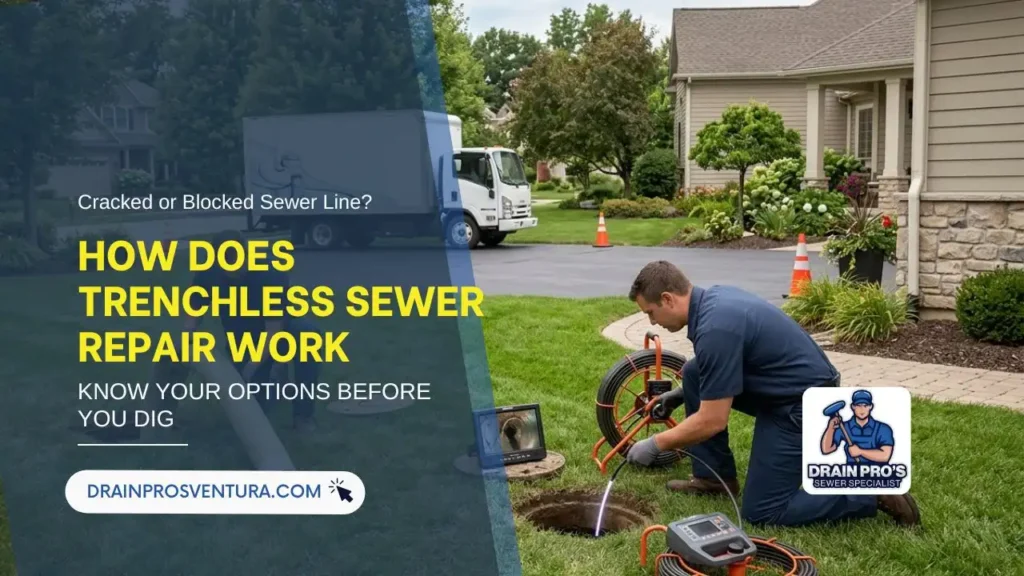
Not every sewer repair starts with digging anymore. And that alone changes how many landlords solve their pipe problems today.
Instead of opening long trenches over the property, trenchless methods repair sewer lines from inside the pipe.
So when people ask, ‘How does trenchless sewer repair work? ’
The answer is that it starts with inspection, cleaning, and repairing the line with minimal surface disruption.
According to the Environmental Protection Agency (EPA), aging sewer systems and tree roots are some of the most common reasons behind underground sewer pipe damage all around the properties in the United States.
How Does Trenchless Sewer Repair Work Underground?
Most trenchless sewer projects follow some processes before the repair even begins.
First, plumbers inspect the sewer line using a waterproof camera. This helps locate:
- Cracks
- Leaks
- Root intrusion
- Buildup
- Collapsed sections
Without inspection, the repair method can easily become a guess instead of a proper solution.
After the inspection, the sewer line usually gets cleaned thoroughly. In many cases, hydro jetting removes grease, roots, sludge, and debris that may block the repair process inside the pipe.
Once the pipe becomes clean enough, plumbers decide which trenchless method makes the most sense depending on the condition of the underground.
Pipe Lining Process
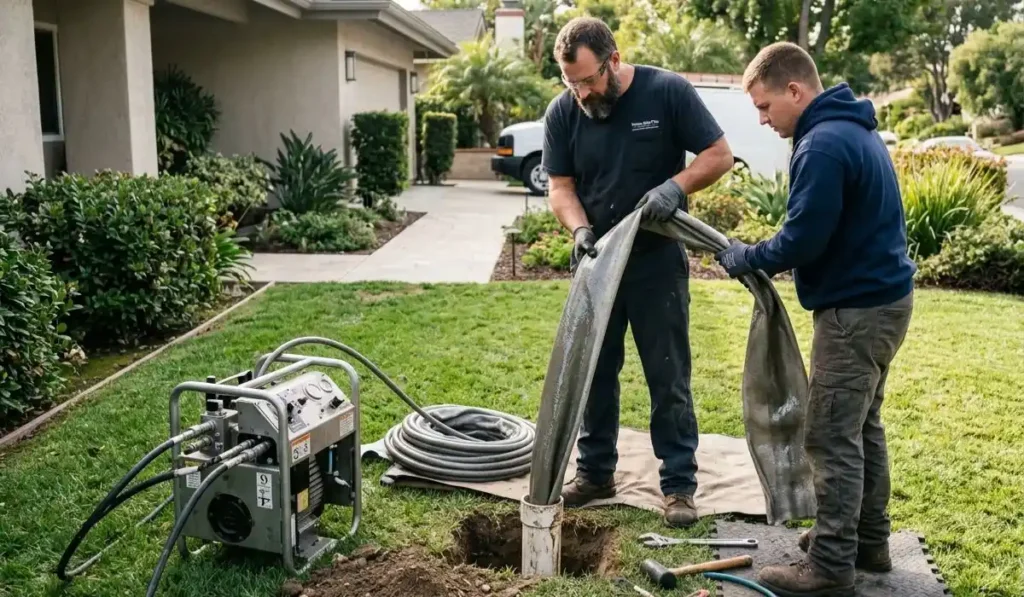
Pipe lining repairs the sewer pipe from the inside instead of removing the entire line underground.
During this process:
- A flexible liner coated with resin gets inserted into the damaged pipe
- The liner expands inside the sewer line
- The material hardens and forms a new pipe wall inside the existing pipe
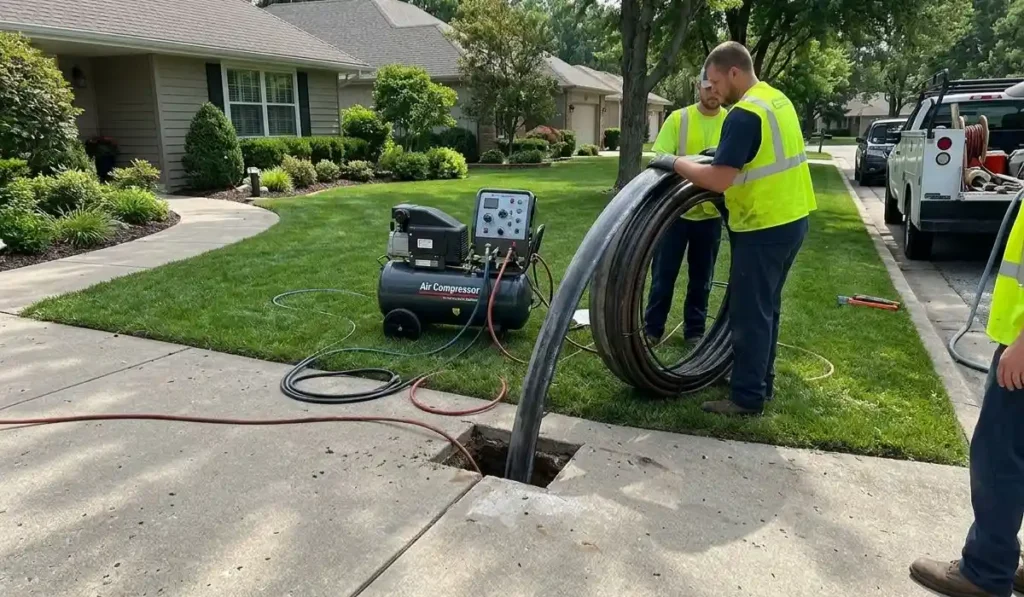
Pipe Bursting Process
Pipe bursting works differently.
It does not repair the old sewer line. Here, plumbers break the broken pipe while pulling a new pipe into the same path beneath the ground.
This method is for:
- severely damaged sewer lines
- collapsed sections
- badly weakened pipes
- major root damage
What Is a Trenchless Sewer Line?
About ‘What is a trenchless sewer line?’, it usually means a sewer pipe is repaired or replaced using trenchless methods instead of traditional excavation methods.
The sewer line may include:
- a new inner pipe liner
- reinforced pipe walls
- a newly installed underground pipe
Modern trenchless sewer systems are often designed to resist:
- root intrusion
- corrosion
- cracking
- future leaks
What Is Trenchless Sewer Repair and Why Is It Necessary?
Many hear the term for the first time after a sewer inspection of their properties.
Simply put, What is trenchless sewer repair means repairing your underground sewer pipes without opening any large trench across the house.
Traditional sewer replacement often damages: lawns, landscaping, patios, sidewalks, and driveways.
Trenchless methods help reduce much of that disruption by working through smaller access points instead.
That is one reason trenchless repair has become much more common in residential plumbing work over the last several years.
Benefits of Trenchless Sewer Repair Are Many
One of the biggest benefits of trenchless sewer repair is that you can avoid large-scale property damage. Here is a simple comparison.
| Repair Benefit | Why Many Homeowners Prefer It |
| Less digging | Helps protect the property |
| Faster repair | Many projects finish sooner |
| Less cleanup | Smaller mess around the yard |
| Lower restoration work | Less concrete and landscape repair |
| Long-lasting materials | Helps resist roots and corrosion |
In many situations, homeowners choose trenchless sewer line repair vs traditional excavation because the property usually needs far less restoration after that.
About Trenchless Sewer Repair Pros and Cons
Trenchless repair has both strengths and limitations. Understanding trenchless sewer repair pros and cons helps you to make better long-term decisions before doing a major sewer project.
| Pros | Cons |
| Less property damage | Higher upfront price sometimes |
| Faster repair process | Not ideal for every pipe |
| Smaller digging areas | Severe collapses may still need excavation |
| Lower cleanup work | Specialized equipment required |
| Durable repair materials | Pipe condition must qualify first |
For many homes, the lower restoration costs later help balance the higher starting cost.
Problems With Trenchless Sewer Repair
Although trenchless methods work very well in many situations, there can still be problems with trenchless sewer repair depending on the condition of the underground line.
Some sewer pipes may not qualify because of:
- Severe pipe collapse
- Major shifting underground
- Structural failure
- Difficult underground access
- Poor older installations
Trenchless Sewer Line Repair vs Traditional Digging
Many compare trenchless sewer line repair vs traditional digging before deciding which option makes more sense.
At first, traditional excavation can sometimes look cheaper. But the larger price often comes later during restoration work.
Here is a simple comparison table.
| Repair Factor | Trenchless Repair | Traditional Digging |
| Digging amount | Minimal | Heavy excavation |
| Yard damage | Usually lower | Often significant |
| Cleanup work | Less | More |
| Restoration costs | Usually lower | Often higher later |
| Project disruption | Smaller | Larger |
Cost of Trenchless Sewer Line Replacement
The cost of trenchless sewer line replacement usually depends on:
- Sewer pipe depth
- Pipe length
- Repair method
- Root intrusion
- Underground access
- Overall pipe condition
According to industry cost averages across the United States, trenchless sewer line repair costs can range from several thousand dollars, depending on the severity of the underground damage.
Here is a general price overview.
| Trenchless Sewer Project | Average Cost Range |
| Small trenchless repair | $2,000 – $6,000 |
| Standard trenchless replacement | $4,000 – $15,000 |
| Major trenchless replacement | More than $15,000+ |
| Pipe lining projects | $80 – $250 per foot |
| Pipe bursting projects | $100 – $300 per foot |
Is Trenchless Sewer Repair Worth It?
Many of you eventually ask: Is trenchless sewer repair worth it?
For many properties, yes.
When homeowners compare:
- Cleanup work
- Property damage
- Restoration costs
- Repair time
- Overall disruption
Trenchless repair often becomes the more practical long-term option.
Final Thoughts
A sewer repair project no longer always means tearing apart the entire yard.
Modern trenchless methods now allow many underground sewer problems to be repaired with much less excavation than older digging methods. In many homes, that means less cleanup, less restoration work, and less disruption around the property overall.
Still, every sewer line is different. Some underground pipes allow for trenchless repair, while others may still require traditional digging according to the condition.
Professional sewer inspection can help determine which repair method makes the most sense before the damage spreads in future.
FAQs
What is trenchless sewer repair?
It means repairing underground sewer pipes with minimal digging as an alternative of opening large trenches.
What are the benefits of trenchless sewer repair?
Major benefits are less digging, reduced property damage, faster repairs, and lower cleanup work.
Is trenchless sewer repair worth it?
Yes, it is. Though it costs more, many owners still choose it because it reduces restoration work, cleanup, and property disruption compared to traditional digging methods.