
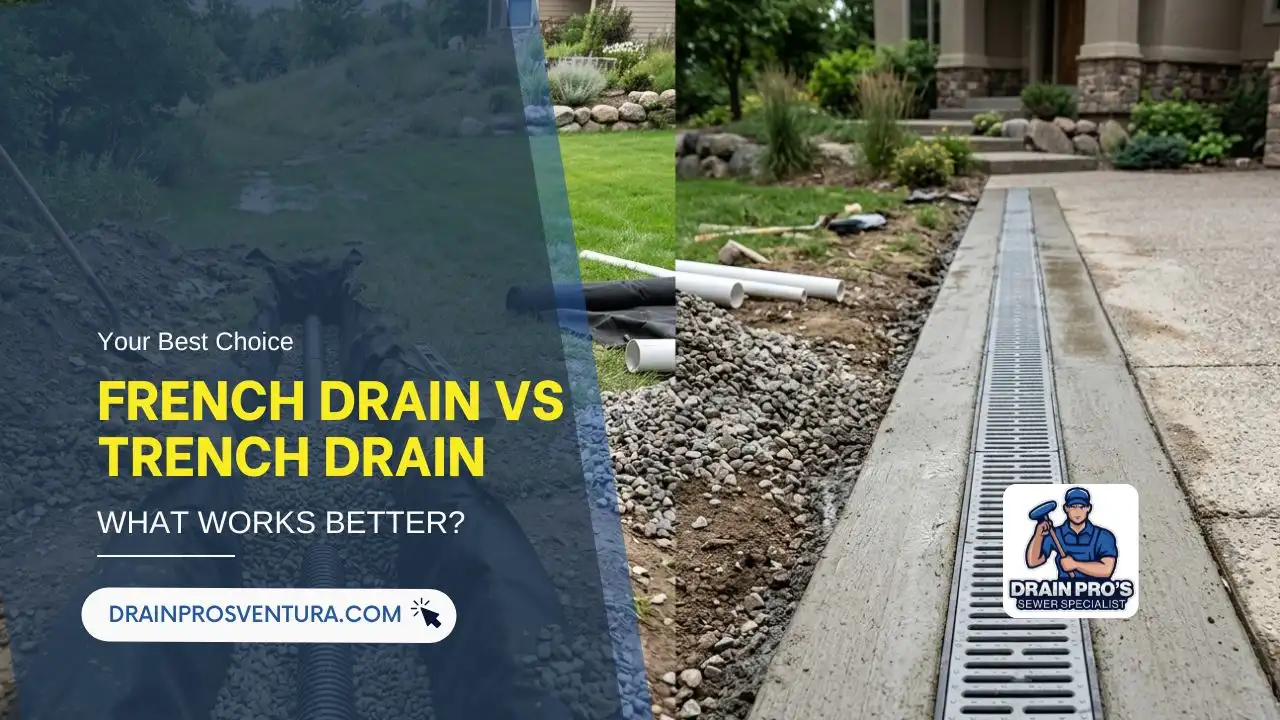
At some point in our lives, we can face drainage problems in our houses or other properties.
When it comes to the problem of the drain system, it does not always tell you where the real problem is. And sometimes you see water sitting on the driveway. But the bigger issue here is the poor surface flow.
Or sometimes the yard looks wet all the time. But the real problem is the trapped water under the soil.
That is why choosing the right drain system is necessary, because you may install one system and still see water coming back in the same area! Frustrating right?
Firstly, you need to understand that it is not because drainage does not work. In fact, it is because of the wrong type of water problem.
And this is where comparing French drain vs trench drain systems becomes important, and everyone should learn about it.
French Drain vs Trench Drain: Understanding the Main Difference
When comparing French drain vs trench drain systems, the biggest contrast is where the water comes from. For example:
A French drain mainly handles the underground water. On the other side, a trench drain handles the surface water.
Although both systems move water away from the property, they work very differently.
Here are quick French trench drain comparisons for you-
| Feature | French Drain | Trench Drain |
| Main purpose | Controls underground water | Controls surface water |
| Best for | Wet soil, soggy yards, foundation moisture | Driveways, patios, garages, walkways |
| Water source | Water inside the soil | Rainwater flowing over surfaces |
| Installation style | Buried underground | Installed at the surface level |
| Visibility | Mostly hidden | Visible grate on top |
| Common location | Around foundations, yards, and basements | Concrete areas, entrances, and outdoor surfaces |
| Water collection speed | Slower but deeper | Fast surface collection |
| Best long-term use | Moisture control | Flood prevention on hard surfaces |
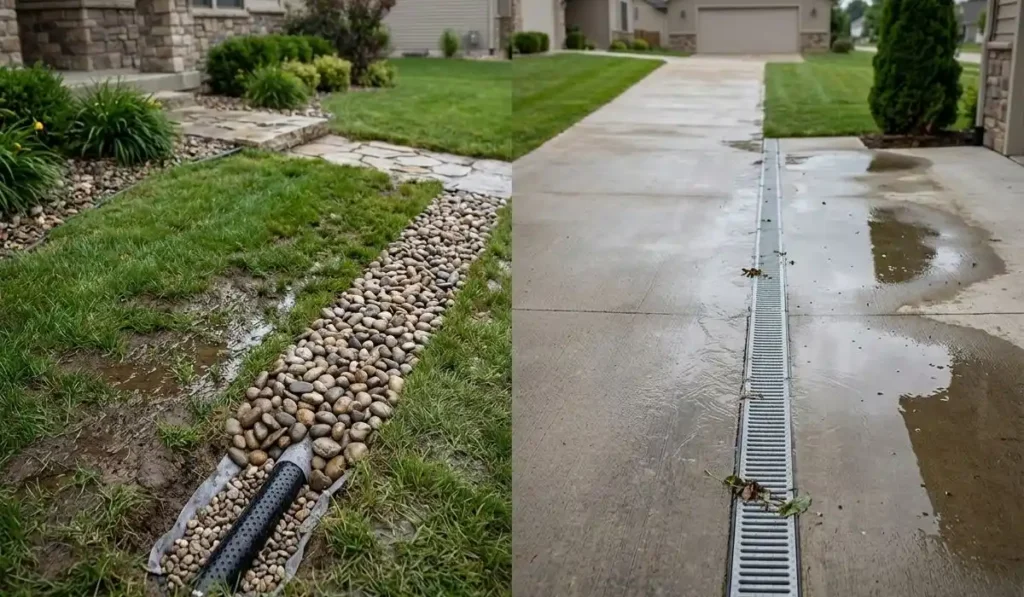
What Is a French Drain?
A French drain is a setup of an underground drainage system. It collects extra water from the soil and moves it away from your property.
It usually includes:
- a dug trench
- gravel or crushed stone
- perforated pipe
- filter fabric to reduce dirt blockage
This system helps when water keeps soaking into the ground around a home.
A French drain is often used for:
- soggy yards
- basement moisture
- wet soil near foundations
- water around landscaping
- long-term foundation protection
According to the American Society of Home Inspectors, poor drainage is one of the common reasons moisture problems develop over time in a house.
What Is a Trench Drain?
A trench drain is a long, narrow surface drain covered with a grate. It collects water from the top of the ground and moves it away immediately before it spreads across the area of the property.
You can use Trench drains near:
- driveways
- garage entrances
- patios
- pool decks
- walkways
- outdoor concrete areas
They are very useful when water moves quickly, especially during rain. According to FEMA, a poor surface drain system can increase the risk of water entering buildings during heavy storms.
That is why trench drains are often used in places where fast surface water control matters.
Pros and Cons of French Drains
Before installing any drainage system, you may want to know: Will this actually solve my water problem long term?
That is why understanding the pros and cons of French drains matters.
| Pros of French Drains | Cons of French Drains |
| Helps remove underground water | Requires digging |
| Can protect foundations | Installation can cost more |
| Helps reduce soggy yard areas | Not ideal for fast surface flooding |
| Mostly hidden after installation | Can clog without proper materials |
| Good long-term moisture control | Needs a correct slope to work well |
French drains work best when the problem is below the surface. But they may not be enough if rainwater is rushing all over the driveway or patio.
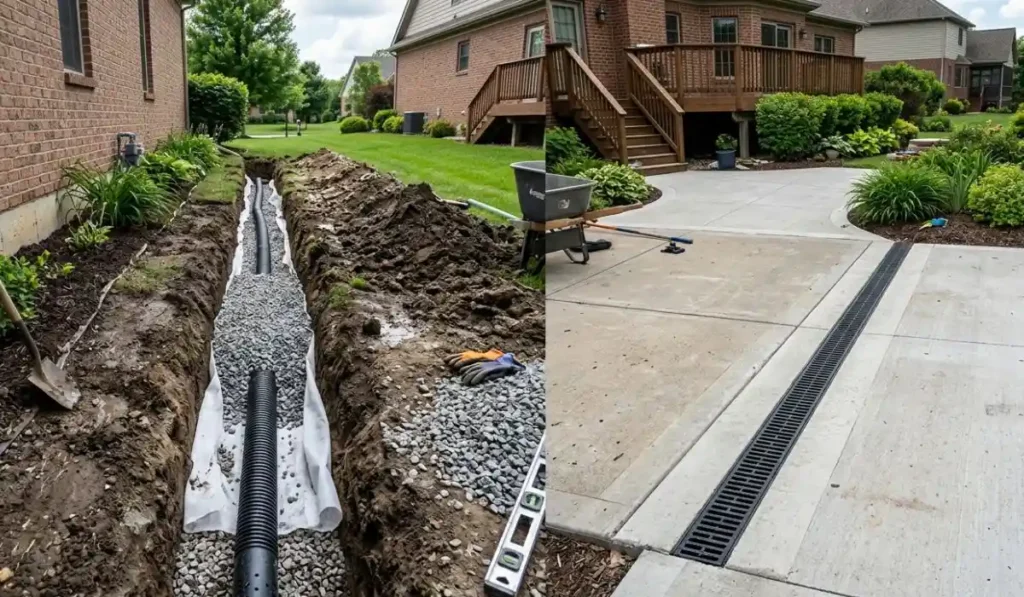
Trench Drain vs French Drain by Problem Type
Not all water problems look the same. Here, this table will make your understanding easier so that you can match the problem with the right system.
| Water Problem | Better Option | Why |
| The yard stays wet for days | French drain | Water is likely trapped in the soil |
| Water enters the garage during rain | Trench drain | Surface water needs fast collection |
| Basement walls feel damp | French drain | Underground moisture may be moving toward the foundation |
| Patio holds water after storms | Trench drain | Water is sitting on a hard surface |
| Soil washes away near landscaping | French drain | It can redirect water below the surface |
| Driveway floods near the entrance | Trench drain | It catches runoff before it spreads |
| Water pools near the foundation | French drain | Helps reduce moisture pressure around the home |
Why French Drain Works Better
There are many situations where a French drain can work better than a trench drain if the problems are originally under the ground. For example:
- wet yards
- underground water buildup
- basement moisture
- foundation water problems
- landscape drainage issues
If the soil stays wet for a long time after rain, then the problem is not just surface water. Here, the ground may be holding too much moisture. And this is where a French drain can help because it moves water away from below the surface.
If your project involves collecting surface water from driveways, patios, or pool decks, you may also want to compare French Drain vs Channel Drain to understand which drainage system performs best for those applications.
Can You Use Both Systems Together?
Yes, some properties need both. Actually, this happens when water is causing problems in more than one way. For example, a home may have:
- wet soil near the foundation
- water flowing across the driveway
- patio flooding after heavy rain
- basement moisture after storms
In that case, one system may not solve everything. And here, a French drain can help with underground moisture. On the other side, a trench drain can manage surface runoff of your home.
Together, they can create a more complete drainage plan.
In that case, Companies like Drain Pros Ventura usually inspect where the water is actually coming from first. Because surface flooding and underground moisture problems often need completely different drainage solutions.
Final Thoughts
Overall, both systems move water away from problem areas. But they are not for the same purpose. In fact, a French drain is usually better for underground water. Whereas a trench drain is usually better for surface water.
Understanding the difference between French drain vs. Trench drain systems can help you choose the right solution before water starts damaging the foundation of your house, your driveway, patio, or yard!
However, both systems can protect a property from water damage when they are used in the right place by the experts.
If you are dealing with water problems, then a professional drainage inspection can really help you to identify the safest and most effective solution before the problem gets bad.
FAQ
What is a trench drain used for?
A trench drain collects surface water from our driveways, patios, garages, pool decks, and walkways.
Why French drain good for foundations?
Because it moves underground moisture away from the foundation. The result is a reduction of water pressure around the home, which lowers the risk of long-term moisture damage.
Which is better, trench drain vs French drain?
Depends on the water problem. Also, a French drain is better for underground moisture. A trench drain is better for surface water runoff.