
Noticing your toilet frequently clogging? A constantly clogging toilet may seem like a minor inconvenience, but it can quickly turn into a recurring problem if left unaddressed.
Identifying the cause of the clog is essential for preventing future blockages and ensuring your toilet functions properly.
Toilet clogs can happen for several reasons:
- Excessive toilet paper usage
- Foreign objects flushed down the toilet
- Low-flow toilets
- Clogged sewer lines
- Plumbing issues
Many of these problems can be resolved with some basic knowledge and the right tools. The key is identifying the source of the clog so you can apply the appropriate solution.
This guide will help you:
- Identify common causes of frequent toilet clogs
- Learn when to use a plunger and when to call a plumber
- Understand how to prevent future clogs and avoid costly repairs
Whether the problem is simple or complex, this guide will provide you with the steps needed to restore your toilet’s functionality and avoid future frustrations.
What Are the Causes of a Clogged Toilet?
Toilet clogs can happen for several reasons. Most blockages occur when too much toilet paper, non-flushable items, or weak flushing power prevent waste from moving through the plumbing. Knowing the main causes helps you prevent them.
Flushing Non-Flushable Items
A leading cause of clogs is flushing items that should not go down the toilet.
Even products sold as “flushable” can create blockages, such as:
- Wet wipes
- Feminine products
- Cotton swabs
- Dental floss
- Cat litter
Other items that cause trouble include hair, medications, cigarette butts, and small toys. These do not break down like toilet paper and can collect inside pipes.
Tip: Only flush waste and toilet paper. Throw everything else in the trash.
Low-Flow Toilet Issues
Older low-flow toilets from 1994 to the early 2000s were designed to conserve water but often lacked flushing power. These models use just 1.6 gallons per flush compared to older toilets that used 3.5 to 7 gallons.
The reduced water volume may not generate enough force to push waste fully through the trap and drain line, which causes frequent clogs.
Solution: Modern low-flow toilets have improved significantly. If your toilet is from this era and clogs often, upgrading to a newer model may solve the problem long-term.
Blocked Toilet Trap
The toilet trap is the curved section at the base of your toilet that holds water to block sewer gases. Unfortunately, its narrow design makes it a common clog point.
Signs of a blocked trap include:
- Slow or incomplete draining
- Gurgling noises
- Water backing up into the bowl
- Frequent clogs that return after plunging
Fix: A plunger may not be enough. In many cases, a toilet auger or professional help is needed to clear deeper blockages.
Clogged Toilet Drain or Sewer Line
Sometimes, the problem goes beyond the toilet itself. A clog in the drain or main sewer line can cause recurring toilet backups.
Possible causes include:
- Tree root intrusion
- Collapsed or damaged pipes
- Debris buildup in the sewer system
Symptoms of a sewer line problem:
- Multiple drains clogging at once
- Strong sewage odors
- Gurgling sounds from sinks, tubs, or other fixtures when flushing
Solution: Sewer line issues require a professional plumber. Camera inspections are often used to locate and diagnose the blockage.
Hard Water Buildup
If your home has hard water, minerals such as calcium and magnesium can build up inside your toilet’s rim holes and trap. Over time, this restricts water flow and weakens flushing power.
Signs of hard water buildup:
- White, chalky deposits around or under the rim
- Reduced flush strength
- More frequent clogs
Fix: Regular cleaning with descaling products can help. Severe buildup may require professional treatment or in some cases, toilet replacement.
How to Unclog a Toilet?
A toilet is typically unclogged using a plunger. Ensure the plunger completely covers the drain hole, then push down and pull up with force to create suction. Repeat this motion several times until the clog loosens and the water begins to drain.
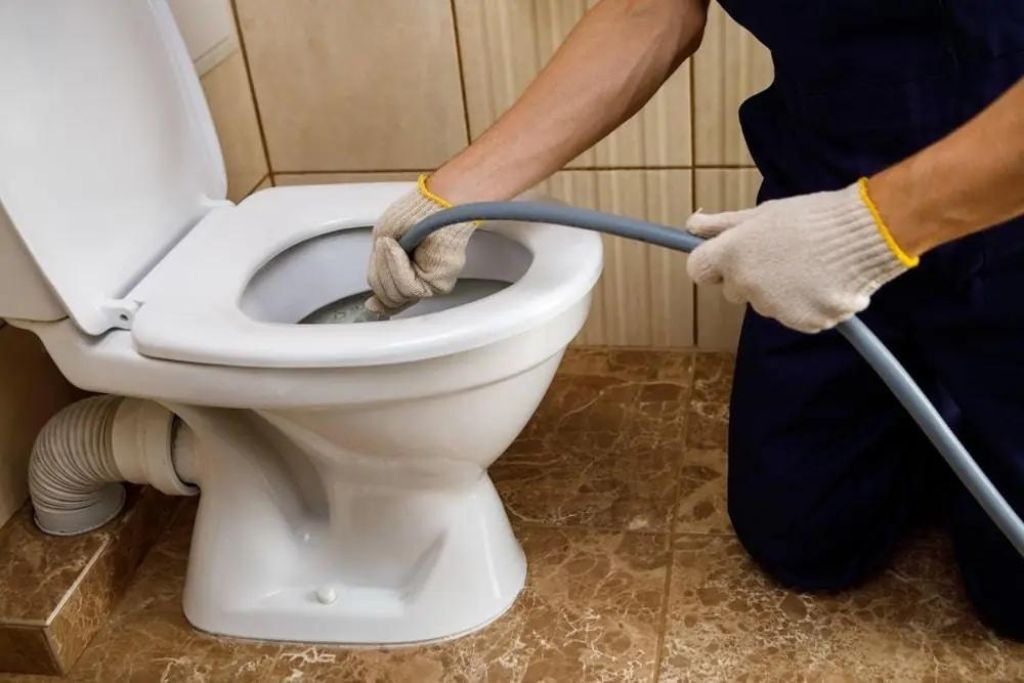
If the plunger does not work, a plumbing snake can be used. Insert the snake into the toilet drain and turn it to help break up the blockage. When you feel resistance, maneuver the handle to clear the obstruction, then flush the toilet to check whether it empties properly.
1. Use a Plunger (First Line of Defense)
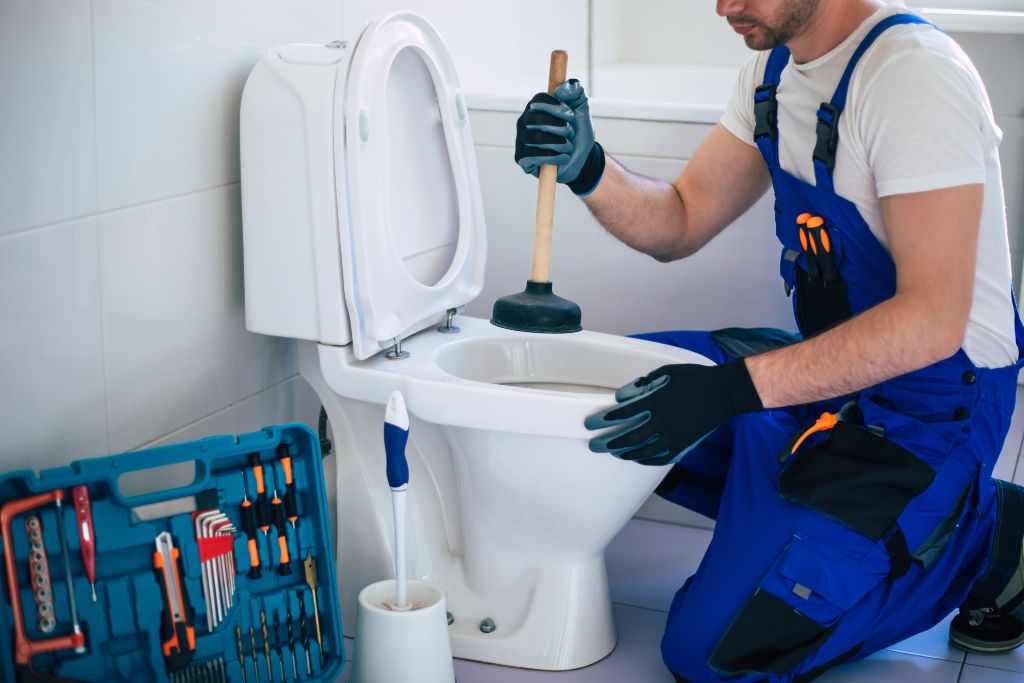
A plunger is the most common and effective tool for unclogging toilets. For best results, use a flange plunger (designed for toilets) not a flat cup plunger.
Steps:
- Make sure the flange (rubber extension) is pulled out.
- Place the plunger over the toilet drain, ensuring a tight seal.
- Push down gently at first to release air, then plunge firmly in steady, rhythmic motions.
- Keep the seal intact while plunging up and down 15 to 20 times.
- Remove the plunger and check if water drains. If not, repeat.
Tip: Don’t plunge too aggressively. This can splash dirty water or damage the toilet.
2. Try a Toilet Auger (for Stubborn Clogs)
If plunging doesn’t work, a toilet auger (closet auger) can reach deeper blockages in the trap or drain line.
Steps:
- Insert the auger’s curved end into the toilet drain.
- Turn the handle clockwise while applying gentle pressure.
- Push and twist until you feel resistance, then continue turning to break up or snag the clog.
- Pull the auger back out carefully.
- Flush the toilet to test.
Why not a regular drain snake? Toilet augers are specially designed to curve through the toilet’s trap without scratching porcelain.
3. Use Hot Water & Dish Soap (for Soft Blockages)
If the clog is caused by toilet paper or organic waste, hot water and dish soap can help.
Steps:
- Squirt several pumps of dish soap into the bowl.
- Heat a bucket of water (hot but not boiling) and carefully pour it into the toilet from waist height.
- Wait 15 to 20 minutes to let the soap lubricate the clog and the hot water soften it.
- Try plunging again.
Caution: Don’t use boiling water. It may crack the toilet bowl, especially older porcelain.
4. Call a Professional Plumber (When DIY Fails)
If none of these methods work or if your toilet keeps clogging repeatedly, the issue may be bigger than a simple blockage.
Professional plumbers can use advanced tools such as:
- Motorized augers for deep clogs
- Hydro-jetting equipment to clear pipes
- Camera inspections to locate hidden problems
Recurring clogs could signal problems with your toilet’s design, your sewer line, or hard water buildup. A professional plumber can diagnose the issue and prevent costly damage.
How Can You Prevent Toilet Clogging?
Preventing toilet clogs is easier than fixing them. With proper habits and regular maintenance, you can keep your plumbing running smoothly.
1. Flush Only Toilet-Safe Items
The most important rule is to control what goes down the toilet. Only toilet paper and human waste should be flushed. Everything else should go in the trash.
Tips:
- Keep a small trash can with a lid next to the toilet for items like dental floss, cotton swabs, and personal hygiene products.
- Educate family members and guests about proper toilet use. Many products labeled “flushable” can still cause blockages in your plumbing.
2. Avoid Overloading the Toilet
Even toilet paper can cause clogs if used excessively.
Tips:
- If someone needs larger amounts of toilet paper for medical reasons, upgrading to a higher-powered toilet may help prevent clogs.
- Fold or use a medium-sized amount of toilet paper at a time.
- Flush multiple times if needed instead of trying to flush a large amount at once.
- For households with children, consider posting guidelines for toilet paper usage in the bathroom.
3. Maintain Your Toilet Regularly
Regular maintenance can prevent small issues from becoming major problems.
Tips:
- Monitor flushing performance and address weak flushes or slow drainage promptly.
- Clean under the toilet rim monthly to remove mineral deposits and keep water passages clear.
- Use toilet bowl cleaners designed to remove mineral buildup.
- If you live in a hard water area, consider professional cleaning annually to remove deposits that home cleaning cannot.
4. Educate Household Members
Prevention works best when everyone in the household follows the same rules.
Tips:
- Discuss plumbing care regularly to reinforce good habits and protect your home’s plumbing system.
- Post reminders about what not to flush.
- Explain how improper use can lead to clogs and costly repairs.
- Consider a simple checklist for guests outlining your toilet usage guidelines.
What Are the Best Solutions for a Slow-Draining Toilet?
If you have a toilet that is slowly draining, you may want to consider partial blockages in the pipes or trap. Clear clogs with a plunger or a toilet auger that may be blocking proper water flow. Distracting the clog gently also ensures not to cause damage to the toilet.
If it is still not working, the vent pipe may be blocked, so check that as well. A blocked vent pipe can slow things down by restricting airflow in the plumbing system. Other fixtures may also gurgle or drain slowly. Often it can be necessary to call in a professional to safely cleanse the houses of these blockages.
Check for Partial Blockages
A slow-draining toilet often indicates a partial blockage that hasn’t completely stopped water flow but restricts it significantly. These partial clogs can gradually worsen and eventually cause complete blockages if left untreated.
Use the same techniques you’d apply to a complete clog – plunging, augering, or hot water treatment but with modified intensity. Gentle, persistent effort often resolves partial blockages more effectively than aggressive action.
Monitor your toilet’s drainage speed regularly. Catching slow drainage early allows for easier resolution and prevents complete blockages that can cause overflow and water damage.
Inspect the Vent Pipe
Your toilet’s vent pipe allows air to enter the drainage system, facilitating proper water flow. A blocked vent pipe can cause slow drainage, gurgling sounds, and recurring toilet clog issues throughout your home.
Vent pipe blockages typically require professional attention because they involve roof access and specialized equipment. However, you can identify vent problems by noting whether multiple fixtures drain slowly or if you hear unusual sounds from your plumbing system.
Professional plumbers can safely clear vent pipe blockages and ensure your entire drainage system functions optimally.
Address Hard Water Buildup
Hard water minerals can accumulate in your toilet’s internal passages, gradually reducing flushing efficiency and contributing to slow drainage. Regular descaling treatments can help manage this buildup and maintain proper toilet function.
Use commercial toilet bowl cleaners designed for hard water stains, or consider installing a water softener system for whole-house protection. Professional descaling services can address severe buildup that regular cleaning can’t remove.
If mineral buildup is extensive, toilet replacement might be more cost-effective than repeated professional cleaning services, especially for older toilets with significant accumulated damage.
Call Drain Pros Ventura for Toilet Clogging Solutions
Do not let a repeatedly clogged toilet disrupt your daily life and peace of mind. While minor blockages can often be resolved with DIY techniques, stubborn or recurring clogs require specialized skills and expertise. A trained professional is needed to identify and address the root cause.
At Drain Pros Ventura, we understand the frustration of dealing with a toilet that constantly clogs. Our diagnostic services thoroughly examine the underlying cause, ensuring long-term solutions that address the problem, not just the symptoms. If your toilet stinks along with frequent clogs, our team can identify the source and recommend the right repair.
We have the equipment and expertise to restore your bathroom’s functionality and reliability.
If you want to stop clogged toilets for good, book a service with our expert team at Drain Pros Ventura. Our professionals provide the solutions your home needs. Don’t wait for the next clog to ruin your day, act now and enjoy peace of mind with well-functioning plumbing.
FAQs About Toilet Clogs
Why does my toilet keep clogging frequently?
Frequent toilet clogs usually result from flushing inappropriate items, using too much toilet paper, or underlying plumbing issues like blocked traps or sewer line problems. Older low-flow toilets may also lack sufficient flushing power, leading to recurring blockages.
Can flushing certain items cause repeated clogs?
Yes, items like wet wipes, feminine hygiene products, dental floss, hair, cotton swabs, and cat litter can cause repeated clogs even when flushed in small quantities.
When should I call a plumber for a clogged toilet?
Call a professional plumber when DIY methods fail to resolve the clog, when your toilet keeps clogging frequently despite preventive measures, or when you notice additional symptoms like multiple drain backups, sewage odors, or gurgling sounds from other fixtures. If plunging hasn’t solved the problem, it’s important to understand why your toilet won’t unclog with a plunger before attempting more aggressive methods that could damage your plumbing.
What do plumbers recommend for a clogged toilet?
Plumbers typically recommend using a plunger, a toilet auger, or professional drain cleaning services to clear a clogged toilet.