
Every week, our crew at Drain Pros Ventura pulls into driveways across Ventura County and sees the same thing sitting under the sink: a half-used bottle of Drano, a jug of Liquid-Plumr, or a box of crystalline sulfuric acid granules. Homeowners reach for these products because they are cheap, immediate, and on the shelf at every hardware store on Telephone Road and Main Street. The question nobody asks until something goes wrong is whether they are actually safe, for your pipes, your body, your household, and the environment.
This guide cuts through the marketing language and gives you the straight answer, backed by data from toxicology studies, plumbing industry research, and federal safety databases. By the time you finish reading, you will know exactly when a chemical drain cleaner is a reasonable option and when calling a licensed plumber is the only move that makes sense.
- 3,000+ ER visits per year linked to drain cleaner exposure in the U.S.
Source: American Association of Poison Control Centers, 2023 - 17% of plumbing service calls involve damage worsened by prior chemical use
Source: Plumbing Manufacturers International, 2022 - $450 million annual U.S. retail sales of chemical drain cleaning products
Source: Statista, 2024 - 62% of clogs are not fully cleared after one chemical treatment
Source: National Plumbing Industry Report, 2023
What Chemicals Are Inside Drain Cleaner Bottles?
Chemical drain cleaners fall into four categories based on their active chemistry. Each works by a different mechanism, and each carries a different risk profile. Understanding what you are pouring down the drain matters more than the brand name on the label.
1. Caustic Alkaline Cleaners (Sodium Hydroxide / Lye)
These are the most common type. Products like Drano Max Gel and Liquid-Plumr rely on sodium hydroxide (lye) or potassium hydroxide. The chemistry is straightforward: lye generates heat when it contacts water and converts fats, proteins, and hair into a soapy, water-soluble material that flushes away. The reaction temperature can reach 200 degrees Fahrenheit inside the pipe.
2. Oxidizing Cleaners (Bleach-Based / Peroxide-Based)
These use sodium hypochlorite (household bleach) or hydrogen peroxide at high concentration. They break down organic material by oxidizing the chemical bonds. They work slower than lye-based products but produce less heat. They are often marketed as “safer” because they are bleach-derived a claim that requires significant qualification.
3. Acid-Based Cleaners (Sulfuric or Hydrochloric Acid)
Sold primarily in hardware stores to contractors and at risk of serious misuse. Products like Zep Drain Defense (acid formula) contain sulfuric acid at concentrations up to 93%. These dissolve almost everything hair, soap scum, grease but also attack metals, corrode porcelain, and release toxic hydrogen sulfide gas when they contact organic matter. The EPA classifies concentrated sulfuric acid as a hazardous waste.
4. Enzymatic Cleaners (Biological)
These are the exception. Enzymatic products use live bacterial cultures and enzyme complexes to digest organic material. They are non-toxic, safe for all pipe materials, and biodegradable. The tradeoff is time: they require 6 to 12 hours to work and they cannot break a severe clog. They function best as a monthly maintenance treatment.
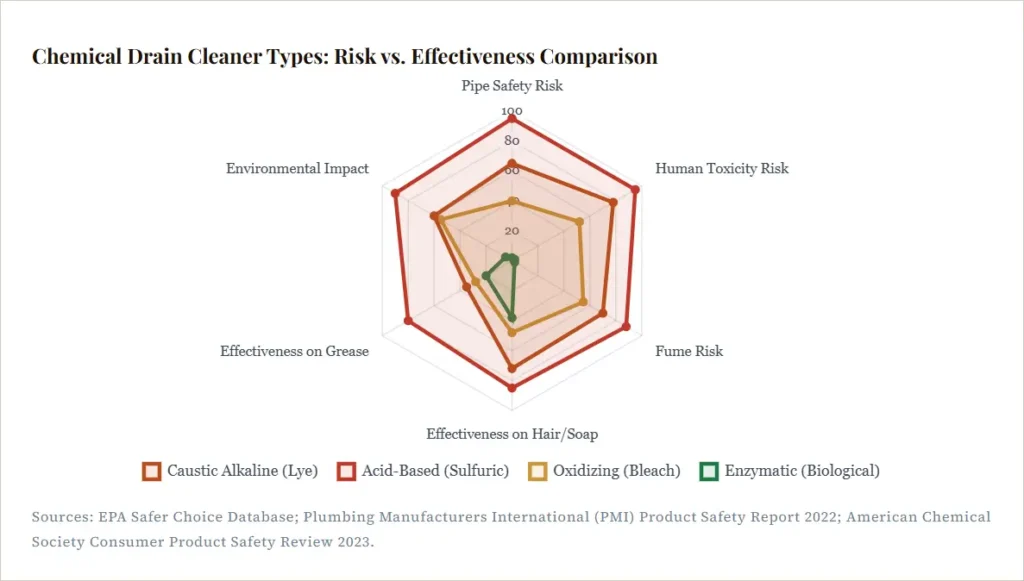
| Type | Active Chemical | Pipe Safety Risk | Human Toxicity Risk | Clog Effectiveness |
|---|---|---|---|---|
| Caustic Alkaline | Sodium / Potassium Hydroxide | Medium | High | Moderate |
| Oxidizing | Sodium Hypochlorite, Peroxide | Low–Medium | Medium | Low–Moderate |
| Acid-Based | Sulfuric / Hydrochloric Acid | Very High | Severe | High |
| Enzymatic | Bacterial Cultures, Enzymes | None | None | Low (maintenance) |
How Chemical Drain Cleaners Affect Plumbing Pipes
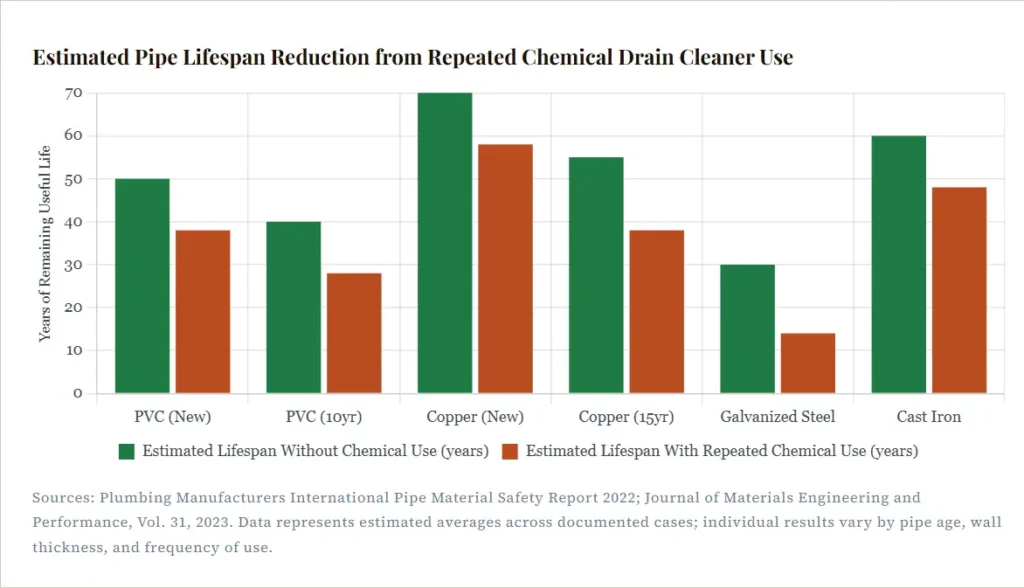
The most persistent myth about chemical drain cleaners is that they are “pipe-safe.” Every major manufacturer prints some version of this claim on the label, subject to fine-print exceptions. Here is what the data and our field experience in Ventura County actually show.
PVC and ABS Plastic Pipes
Sodium hydroxide generates substantial heat, sometimes exceeding 180 degrees Fahrenheit at the clog site. PVC has a heat distortion temperature of approximately 140 to 160 degrees Fahrenheit. Repeated or prolonged contact softens PVC at joints and fittings, the exact points where leaks develop. A single treatment rarely causes immediate failure, but five or ten treatments over two years measurably weaken PVC schedule 40 pipe, particularly at glued joints.
Older Metal Pipes (Pre-1980 Homes)
Many homes in older Ventura neighborhoods, particularly in Midtown and the East End, still have cast iron drain stacks and galvanized steel supply lines. Acid-based cleaners attack galvanized steel aggressively, stripping the zinc coating and accelerating corrosion to bare iron. Lye-based products are less damaging to iron, but the exothermic reaction accelerates corrosion at existing pits and weak points. If your home has any galvanized or cast iron drainage, acid cleaners are categorically off the table.
Older Copper Pipes
Copper is relatively resistant to lye but highly vulnerable to acid cleaners. Sulfuric acid and hydrochloric acid dissolve copper rapidly. One documented case study from a San Diego plumbing contractor found pinhole leaks developing in copper supply lines within 18 months of repeated acid drain cleaner use in the same bathroom.
The Trapped Chemical Problem
When a chemical cleaner fails to clear a clog, which happens in 62% of cases after one treatment, the chemical sits trapped in standing water against the pipe wall. This extended contact time multiplies the corrosive effect. When a plumber then arrives to snake or hydro-jet the drain, they must deal with live caustic chemistry in the pipe, which creates a workplace hazard and can splash back during mechanical clearing.
Chemical Drain Cleaner Health Risks You Should Know
Chemical drain cleaners carry significant health hazards that product packaging underrepresents. The risks fall into three categories: acute injury from direct contact, inhalation exposure, and secondary chemical reactions.
Direct Contact Burns
Sodium hydroxide at the concentrations found in commercial drain cleaners (typically 1% to 10%) causes severe chemical burns on contact with skin, eyes, and mucous membranes. These are not like thermal burns, they continue to deepen as long as the chemical is in contact because lye does not denature on the skin surface. Acid-based cleaners cause immediate and severe tissue destruction. The American Association of Poison Control Centers logged more than 3,000 drain cleaner exposure incidents requiring medical attention in 2023 in the United States alone.
Fume Inhalation
Both alkaline and acid drain cleaners release fumes during the reaction. Sodium hydroxide in hot water produces a caustic aerosol. Acid cleaners release sulfur dioxide, hydrogen sulfide, and hydrochloric acid vapor depending on the product. In enclosed bathrooms with poor ventilation, common in older Ventura bungalows, these vapors accumulate rapidly. Symptoms range from eye irritation and coughing to chemical pneumonia in high-concentration scenarios.
Dangerous Mixing Reactions
This is the risk that sends people to the emergency room most often. A homeowner tries one product, it fails, then pours a second product on top. Mixing an acid cleaner with an alkaline cleaner produces a violent exothermic reaction with steam and chemical splash. Mixing bleach-based cleaners with any ammonia-containing product releases chloramine gas. These reactions happen in seconds and in confined spaces.
Environmental Impact of Chemical Drain Cleaners
Ventura County sits between the Santa Monica Mountains and the Pacific Ocean. The Ventura River watershed and Calleguas Creek both drain to sensitive coastal habitats. What goes into local sewer systems matters beyond your property line.
Wastewater Treatment Limitations
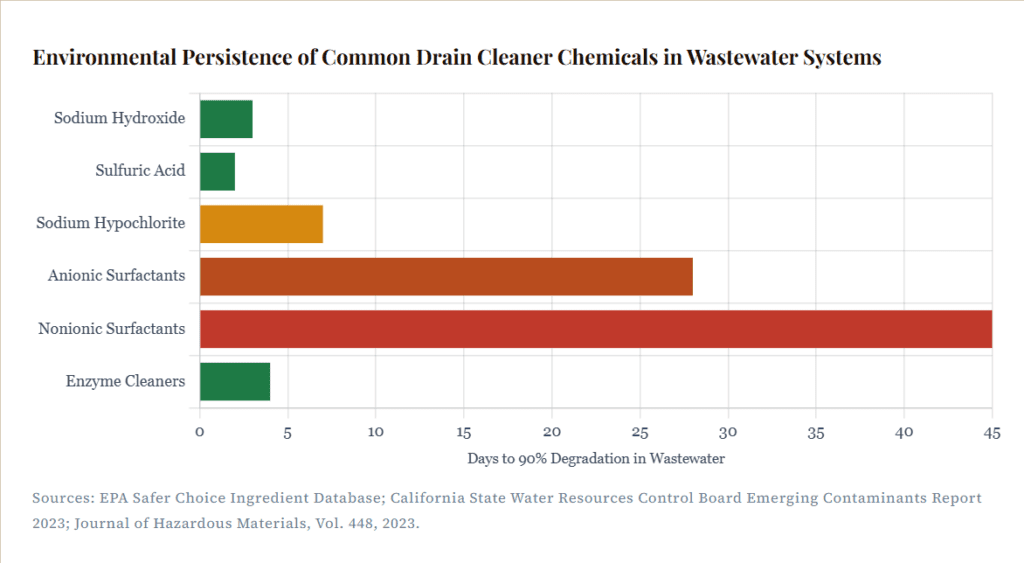
Ventura’s water reclamation facilities are designed to handle biological waste and conventional cleaning products. High concentrations of sodium hydroxide or sulfuric acid disrupt the bacterial colonies that drive biological treatment in activated sludge systems. The EPA notes that extreme pH discharges, below pH 5 or above pH 9, can violate the Clean Water Act if concentrated enough. A single drain treatment is unlikely to cause a permit violation, but habitual use across a neighborhood contributes to treatment system stress.
Surfactant and Solvent Residues
Beyond the active chemicals, commercial drain cleaners contain surfactants, solvents, and corrosion inhibitors, many of which are not fully removed by standard wastewater treatment. Some surfactant residues are detected in reclaimed water used for agricultural irrigation in Ventura County’s agricultural zones, including parts of the Oxnard Plain. California’s State Water Resources Control Board has flagged several surfactant classes as emerging contaminants of concern.
When Chemical Cleaners Work and When They Make Things Worse
Chemical drain cleaners are not entirely without merit. They have a narrow window of appropriate use, and knowing where that window sits is the difference between a quick fix and a $600 emergency call.
Where They Can Help
Caustic or oxidizing cleaners can be effective on fresh, soft organic clogs, typically hair and soap scum buildup in a shower drain that is slow but not completely blocked. The clog must be near the drain opening, the pipe must be plastic or modern copper, and the user must follow the product instructions precisely regarding dwell time and flushing.
Where They Fail or Cause Harm
- Grease clogs: Hot grease re-solidifies further down the line. Chemical cleaners push the grease mass further from the opening but do not dissolve it. The result is a deeper, harder-to-reach clog.
- Tree root intrusion: No chemical cleaner dissolves tree roots. This is a hydro-jetting and pipe relining problem.
- Mineral scale buildup: Alkaline products do not address calcium carbonate or mineral deposits. Mild acid descalers exist for this specific purpose but require careful use.
- Complete blockages: If water is standing and not draining at all, the chemical sits on top of the clog. It does not reach the blockage material in a concentration sufficient to work.
- Sewer line issues: Any clog that is in the main sewer line rather than a branch drain requires professional equipment, not chemistry.
- Septic systems: Chemical drain cleaners kill the beneficial bacteria in septic tanks that make the system function. A single heavy application can temporarily crash septic system performance.
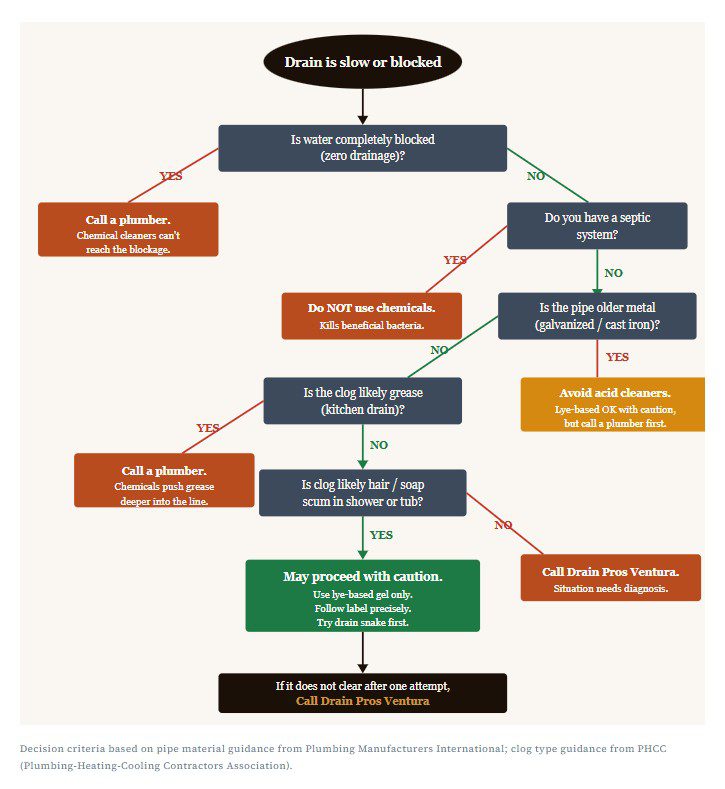
If you’re dealing with recurring drain problems, regular maintenance can help prevent major blockages before they start. Following these expert drain cleanout tips can improve drain performance, reduce buildup, and help you avoid costly plumbing repairs.
Safer Alternatives to Chemical Drain Cleaners That Actually Work
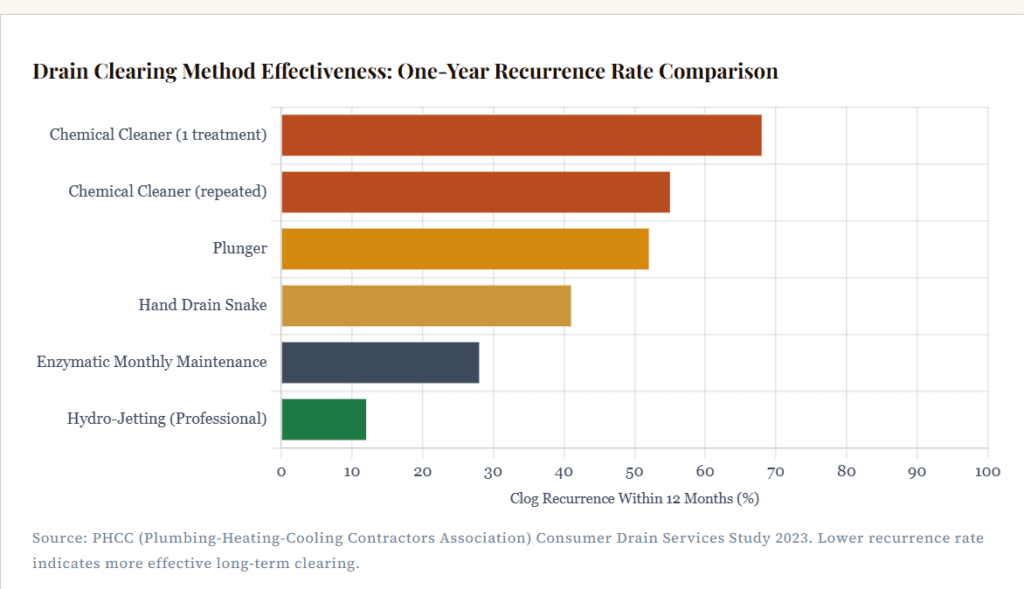
The plumbing industry has known for decades that mechanical methods consistently outperform chemical ones on most residential clogs. Here is what Drain Pros Ventura recommends before reaching for any chemical product.
1. Drain Snake (Hand Auger)
A 25-foot hand auger costs $30 to $50 at any Ventura hardware store. It can clear the vast majority of hair and soap scum clogs in bathroom drains and is safe on all pipe materials. For a homeowner willing to spend 15 minutes, this is the first tool to use, not a last resort.
2. Plunger (Cup and Flange Types)
Many slow drains are partial clogs that respond to targeted pressure. A cup plunger on a flat drain, or a flange plunger on a toilet, can dislodge material that a chemical would just sit on top of. Cover any overflow outlet first to build pressure efficiently.
3. Enzyme Drain Maintenance
Monthly use of an enzymatic drain treatment, products like Bio-Clean or RoebicK-67, digests organic buildup before it becomes a clog. This is genuinely the safest option, and it works. The trade-off is patience: it is a prevention strategy, not an emergency fix.
4. Hydro-Jetting (Professional)
When a drain is recurrently slow despite home attempts, hydro-jetting is the definitive solution. Our crew uses water pressure between 1,500 and 4,000 PSI to scour the inside of the pipe clean, removing grease buildup, mineral scale, and organic material completely. It is safe for most pipe materials when performed by a trained technician and leaves no chemical residue.
5. Pipe Camera Inspection
If you have a repeatedly problematic drain, a camera inspection tells you exactly what you are dealing with: root intrusion, pipe collapse, mineral scale, grease buildup, or a misaligned joint. Treating blind with chemicals when the real problem is a cracked pipe is how a $150 service call becomes a $4,000 repair.
If You Use Chemical Cleaners: Non-Negotiable Safety Rules
If after reading this you decide a chemical drain cleaner is appropriate for your situation, follow these rules precisely. There is no flexibility on any of them.
- Wear chemical-resistant gloves and eye protection. Splash from a foaming reaction in a pipe is a real risk. Standard dish gloves are not sufficient; use nitrile or neoprene gloves that reach past the wrist.
- Ventilate the room fully. Open a window, turn on the exhaust fan, and leave the door open. Do not stand directly over the drain during the reaction.
- Never mix products. Use one product and one product only. If it fails, flush with hot water and call a plumber. Do not add a second cleaner.
- Follow the exact contact time on the label. Leaving a caustic product in the pipe longer than specified increases pipe damage without improving clog removal.
- Flush with full volume cold water afterward. Hot water accelerates chemical activity. Cold water flushes residue out without continuing the reaction at the pipe wall.
- Store products in original containers with secure caps, away from children. Drain cleaners are among the most acutely toxic products stored in residential spaces.
- Dispose of unused product at a Ventura County household hazardous waste facility. Do not pour unused product down the drain, into a trash bin, or onto soil.
The Straight Answer
Chemical drain cleaners are not safe in any comprehensive sense. They are a calculated risk, one that is sometimes acceptable on a narrow and specific type of clog, and frequently unacceptable given pipe age, clog type, pipe material, or household circumstances.
They are not as effective as mechanical methods. They carry genuine injury risks that are underrepresented on product labels. They cause measurable pipe damage with repeated use. They have environmental consequences that matter in a coastal county like Ventura. And they fail completely on the most common serious clogs; grease, roots, and mineral scale.
The honest advice that Drain Pros Ventura gives every customer is this: try a drain snake first. If that does not work, call us. A professional service visit solves the actual problem, costs less in the long run than repeated chemical treatments that do not fully work, and does not leave your pipes or your household worse off than before.