
A clogged drain is one of the most common plumbing problems in any home. Before you reach for a bottle of harsh chemical drain cleaner or call a plumber, it is worth trying to unclog a drain with baking soda and vinegar. It is inexpensive, uses items you likely already have in your kitchen, and works well on mild to moderate clogs.
At Drain Pros Ventura, we have cleaned thousands of drains across Ventura County. We want to be straight with you: this method is not a miracle cure for every situation. But for the right kind of clog, it genuinely works. This guide tells you exactly how to do it, when to try it, and when to stop and pick up the phone.
Why baking soda and vinegar work on drains
This method works because of a basic chemical reaction. Baking soda is a base, and vinegar is a mild acid. When you combine them, they produce carbon dioxide gas. That gas creates fizzing and bubbling that loosens organic material clinging to the inside of your pipe walls.
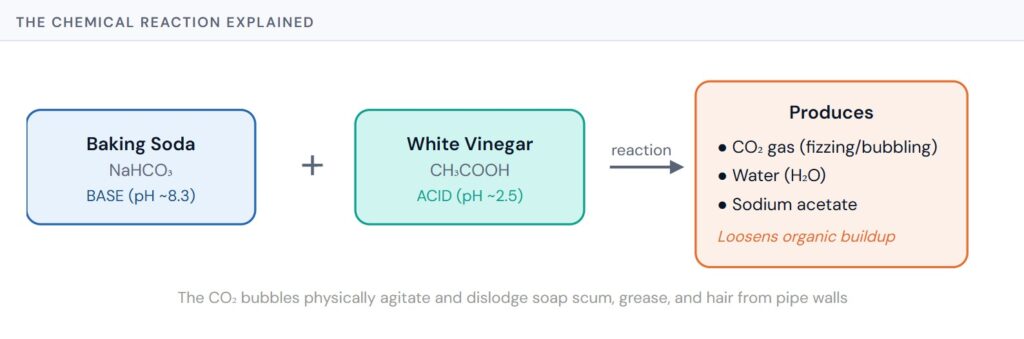
The fizzing action does the real work. It physically agitates material stuck to the inside of your pipe, breaking it loose so water can push it down and through. Hot water before and after the reaction helps flush loosened debris.
Think of it like a gentle scrub brush working from the inside. It is not going to dissolve a solid blockage, but for the greasy, soapy buildup that causes most slow drains, it is often enough to restore good flow.
What you need before you start
Everything you need is likely already in your home. Here is the full list before you start so you are not running back and forth to the kitchen mid-process.
Baking Soda (1/2 cup)
Plain baking soda (sodium bicarbonate). Not baking powder, which has different additives and will not work the same way.
White Vinegar (1/2 cup)
Plain distilled white vinegar. Apple cider vinegar works too but may leave a smell. Avoid cleaning vinegar as it is stronger.
Boiling Water (2 to 4 cups)
Used at the start and finish. Hot water softens grease and flushes debris. Do not use boiling water on PVC pipes, use very hot tap water instead.
Drain Cover or Cloth (1 piece)
Used to plug the drain and force the fizzing reaction downward into the clog rather than back up. A damp cloth or rubber stopper works.
Optional additions: A few drops of dish soap before the baking soda can help cut through grease. Some people add a tablespoon of table salt with the baking soda for extra abrasion. Neither is required but both can help on greasy clogs.
Unclog a Drain with Baking Soda and Vinegar: Complete step-by-step method
Follow these steps in order. Skipping steps or rushing the timing reduces how well unclog a drain with baking soda and vinegar method works.
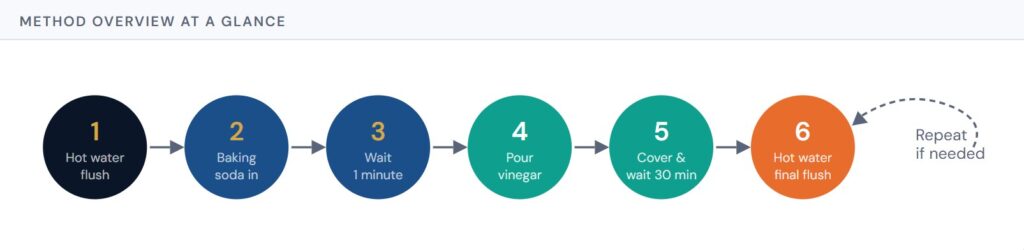
Start with a hot water flush
Pour 2 to 4 cups of very hot water directly down the drain. This softens grease and soap buildup, making it easier for the baking soda and vinegar reaction to penetrate. If you have metal pipes, boiling water is fine. For PVC plastic pipes, use hot tap water only because boiling water can soften the joints over time. (Time: 1 to 2 minutes)
Pour in the baking soda
Measure out half a cup of baking soda and pour it directly into the drain. Try to get it past the drain cover and as far down as possible. A folded piece of paper can work as a funnel if you have a small drain opening. If the drain is already backed up with standing water, spoon the baking soda in and let it settle. (Time: 30 seconds)
Let the baking soda sit for one minute
Give the baking soda a minute to settle into the clog before adding the vinegar. This makes the reaction happen directly at the blockage rather than at the surface. If the drain smells bad, the baking soda will start neutralizing odors during this waiting period. (Time: 1 minute wait)
Pour in the vinegar slowly
Pour half a cup of white vinegar down the drain on top of the baking soda. Pour slowly so you do not wash the baking soda out before the reaction can happen. You will see and hear fizzing immediately. This is the carbon dioxide being produced as the acid and base react. (Time: 30 seconds)
Cover the drain and wait at least 30 minutes
This is the step most people skip, and it is the most important one. Cover the drain with a stopper, a rubber plug, or a damp cloth. Covering it forces the CO2 gas pressure downward into the clog rather than letting it escape up and out of the drain. Leave it alone for at least 30 minutes. For stubborn clogs, leave it overnight if possible. (Time: 30 minutes minimum)
Flush with hot water
Remove the cover and pour another 2 to 4 cups of very hot water down the drain. The goal is to flush the loosened material down and out of your pipe. Run the hot tap for another minute after this final flush to clear anything lingering. Test the drain flow and repeat the full process if it is still draining slowly. (Time: 1 to 2 minutes)
Pro tip from Drain Pros Ventura: For kitchen sink clogs caused by grease, add a squirt of dish soap right after the hot water flush in Step 1. Dish soap is a degreaser and it helps the baking soda reach the grease more effectively once the reaction starts.
What this method works on (and what it does not)
Being honest about this method is important. At Drain Pros Ventura, we see the results of DIY drain work every day, and we can tell you exactly where baking soda and vinegar helps and where it falls short.
Works well on:
- Soap scum and mineral buildup on pipe walls
- Grease and cooking oil (mild to moderate)
- Hair and soap combined (bathroom sink)
- Slow drains caused by gradual buildup
- Drain odors caused by organic matter
- Monthly maintenance to prevent future clogs
- Bathroom sinks and tub drains
Does not work on:
- Solid blockages (bottle caps, toys, food chunks)
- Heavy grease buildup from years of neglect
- Root intrusion in main sewer lines
- Full blockages with standing water
- Damaged or collapsed pipes
- Blocked P-traps from debris
- Toilet clogs (use a plunger instead)
“About 60 percent of slow drains we see in Ventura County homes respond well to gentle DIY methods. The other 40 percent need professional tools to clear properly.”
If your kitchen sink drains normally but your dishwasher is not draining, the problem is often inside the dishwasher drain hose, filter, or pump rather than the sink drain itself.
Common mistakes that kill results
If you have tried this method before and it did not work, one of these mistakes was probably the reason.
- Not covering the drain: CO₂ escapes upward. The gas never reachesthe clog. Reaction is wasted.
- Using baking powder not soda: Baking powder has added starch and cream of tartar. Wrong chemical reaction.
- Skipping the final hot water flush: Loosened debris must be flushed out. Without the flush, it just re-settles.
- Not waiting long enough: 30 minutes minimum. Most people give it 5 minutes and call it a failure.
- Pouring vinegar too fast: Rushing the pour washes baking soda away before the reaction can start.
- Using on a completely blocked drain: If water is not moving at all, this method cannot penetrate the full blockage.
Important warning: Never mix baking soda and vinegar with chemical drain cleaners like Drano. The chemical combination can create dangerous reactions. If you have recently used a chemical cleaner, flush the drain with plenty of water for several minutes before trying the baking soda method.
Drain clog statistics you should know
Drain clogs are more common than most homeowners realize. Here is what the numbers show about how, where, and why drains clog in American homes.
- 17M Americans deal with a clogged drain every single year
- 35% Of emergency plumber calls are drain-related and could have been prevented
- $250 Average cost of a professional drain cleaning call in Ventura County
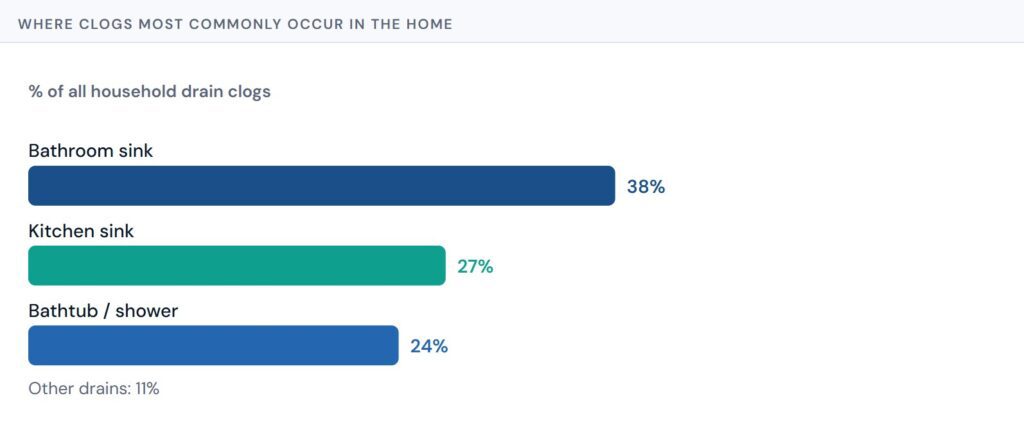
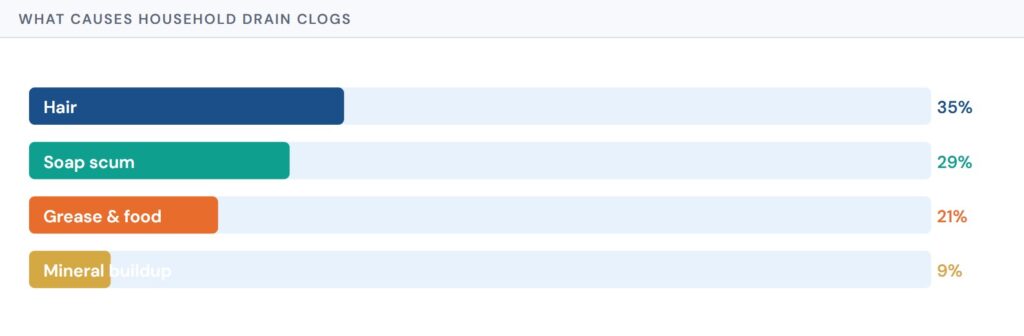
Hair and soap scum together account for about 64 percent of all household drain clogs. These are exactly the kinds of clogs that the baking soda and vinegar method works best on. This is also why bathroom drains clog far more often than kitchen drains.
Other DIY options to try
If baking soda and vinegar does not fully clear the drain, here are two other approaches worth trying before calling a plumber.
| Method | Best for | Effectiveness | Cost | Risk |
|---|---|---|---|---|
| Baking soda + vinegar | Mild buildup, odors | Moderate | Under $1 | Very low |
| Plunger | Soft blockages, toilets | High | $5 to $15 | Very low |
| Drain snake / auger | Hair clogs, deeper blocks | High | $20 to $50 | Low |
| Enzyme drain cleaner | Organic buildup, slow drains | Moderate | $10 to $20 | Very low |
| Chemical drain cleaner | Tough grease clogs | High (short term) | $8 to $15 | Moderate (pipe damage risk) |
| Professional hydro-jet | Any clog, full pipe cleaning | Very high | $150 to $400 | Low (when done professionally) |
The plunger.
A cup plunger (not a flange plunger, which is for toilets) works well on bathroom sink and tub clogs. Fill the sink partially with water, place the plunger over the drain, and pump firmly 10 to 15 times. The suction and pressure can dislodge clogs that chemical methods cannot reach.
The drain snake.
Also called a hand auger, this is a flexible cable you feed into the drain to physically break up or pull out a clog. Hardware stores rent them if you do not want to buy one. They are especially effective on hair clogs that sit in the P-trap beneath the sink.
About chemical drain cleaners: Products like Drano and Liquid-Plumr work on tough clogs but they come with real downsides. They are corrosive and can damage older pipes, rubber gaskets, and PVC fittings over time. Avoid using them frequently, and never use them if you suspect you have a complete blockage, since the chemical can sit and eat at your pipes.
When to stop and call a professional
There is no shame in trying the DIY approach first. But there are specific signs that tell you the problem is beyond what a home remedy can fix.
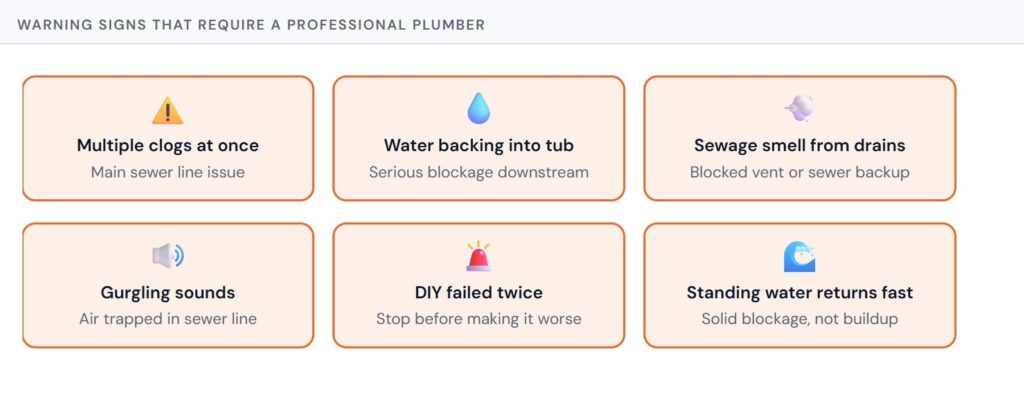
If multiple drains in your home are slow or blocked at the same time, that is almost always a main sewer line problem, not individual clogs. No home remedy is going to fix that, and ignoring it can lead to sewage backing up into your home. For ongoing maintenance and to help prevent recurring blockages, follow these drain cleanout tips to keep your drainage system flowing properly.
If you hear gurgling from your toilet when you run the bathroom sink, or if water backs up into your tub when you flush, call a plumber the same day. These are signs of a serious blockage that needs professional equipment to clear.
At Drain Pros Ventura, we use professional hydro-jetting equipment that cleans your pipes from the inside with high-pressure water. It removes years of buildup completely, not just punches a hole through a clog. For Ventura County homeowners and businesses, we are available seven days a week.
Frequently Asked Questions (FAQ)
Does baking soda and vinegar really unclog a drain?
Yes, but only for light to moderate clogs like soap scum, mild grease buildup, and odors. It is not effective for solid blockages, heavy grease buildup, or main sewer line issues.
How long should I leave baking soda and vinegar in the drain?
At least 30 minutes is recommended. For tougher slow drains, leaving it overnight can improve results before flushing with hot water.
Can I use baking soda and vinegar on a completely blocked drain?
No. If water is not draining at all, the mixture cannot reach the clog effectively. In that case, a plunger or drain snake is a better first step.
Is baking soda and vinegar safe for all pipes?
Yes, it is generally safe for PVC, metal, and older plumbing systems. However, it should not be mixed with chemical drain cleaners, as this can create unsafe reactions.
How often should I use this method for maintenance?
Once a month is enough for preventive maintenance. It helps reduce buildup and keeps drains flowing smoothly.
What should I do if the drain is still slow after trying this method?
If the drain improves slightly but is still slow, repeat the process once more. If there is no improvement at all, the clog may be deeper and require a plunger, drain snake, or professional service.
Can this method damage my pipes?
No, baking soda and vinegar are low-risk and non-corrosive. The main risk comes from using them incorrectly with chemical drain cleaners or applying them to a fully blocked drain without flow.
What drains does this method work best on?
It works best on bathroom sinks, shower drains, and kitchen sinks with mild grease or soap buildup. It is less effective for toilets and main sewer line blockages.
When should I stop DIY and call a plumber?
You should call a plumber if multiple drains are clogged, water is backing up, you notice sewage smells, or repeated DIY attempts do not improve the drain flow.