
Perhaps many don’t know that grease build-up causes nearly half of all sewer blockages in the USA. In fact, a single drip from a faucet wastes roughly 3,000 gallons every year. Being a businessman, you do not add these numbers to the plan. But they come later, when the pipes start causing problems.
So, what is commercial plumbing? In plain terms, it is the full system of pipes and fixtures that keeps a business building working, plus the trade that installs and repairs it. Homes have plumbing too. The commercial side just plays at a much bigger scale. Here is what that means for your commercial building.
What Is Commercial Plumbing & Residential Plumbing
Commercial plumbing covers the water and drainage systems inside any building that is not a private home. Offices count. So do restaurants, hospitals, schools, hotels, and retail stores.
A simple way to check it: if customers, tenants, or employees use the space, the plumbing is commercial. If the system serves one private household, it is a residential plumbing system.
Scale drives everything else. A house serves one family. A commercial building can push water to hundreds of people a day, sometimes thousands.
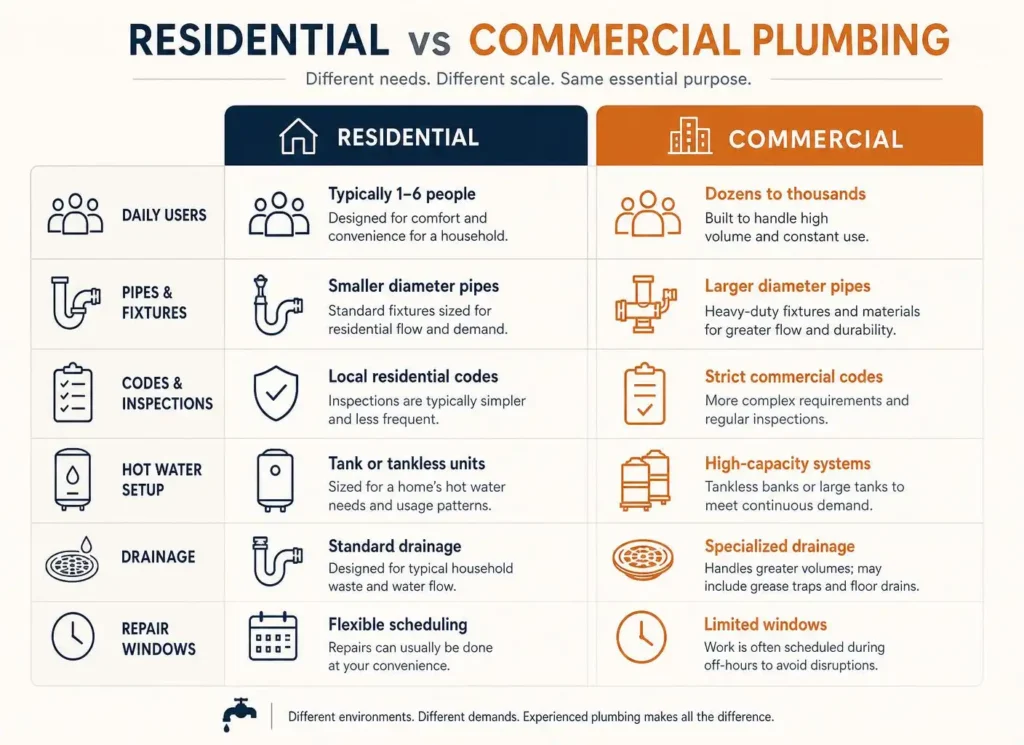
Commercial & Residential Plumbing at a Glance:
| Factor | Residential | Commercial |
|---|---|---|
| Daily users | One household | Hundreds, sometimes thousands |
| Pipes and fixtures | Standard consumer parts | Industrial-grade, heavy-duty materials |
| Codes and inspections | Basic local requirements | Stricter codes, scheduled inspections |
| Hot water setup | Single tank heater | High-capacity heaters or boiler systems |
| Drainage | One or two levels | Branching networks across every floor |
| Repair windows | Daytime appointments | Night and weekend work, plus emergencies |
Same water. Very different stakes.
What Is a Commercial Plumber
A commercial plumber is a licensed professional who installs and services plumbing in business properties. That license does real work. States publish separate code books for commercial work, and the plumber has to know every page.
Multi-story drain stacks. Grease lines. Backflow assemblies. Boiler rooms. A residential plumber can spend an entire career without touching any of it.
Most commercial plumbers juggle standing maintenance contracts and answer to property managers rather than homeowners. Night work comes standard because no restaurant shuts its kitchen at noon so someone can cut into a pipe.
Plumbing Systems Built for Commercial Buildings
Some of this equipment never shows up on the residential side.
Grease traps catch fats, oils, and grease in kitchen drain lines before the mix cools into a plug. Most kitchens pump theirs every one to three months. Backflow preventers keep contaminated water from siphoning into the clean supply, and city code demands an annual test from a certified plumber. Hot water is its own battle, since hotels and restaurants burn through it from open to close, and a dead unit costs $3,000 to $10,000 to replace.
Buildings past five stories add booster pumps, because city pressure quits there.
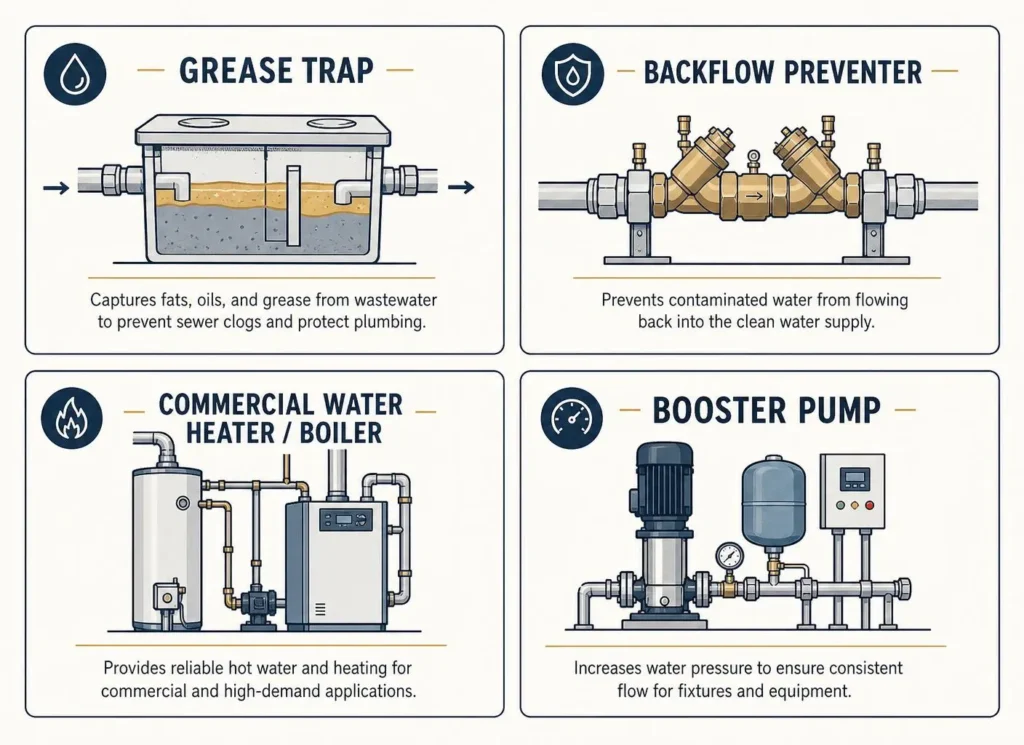
Four systems every commercial building relies on.
Common Commercial Plumbing Services
The standard menu of commercial plumbing services looks like this:
- System design and installation for new construction or renovations
- Preventive maintenance on a fixed schedule
- Drain cleaning and hydro jetting (interlink: /commercial-drain-cleaning/) to strip out years of buildup
- Leak detection and pipe repair before water reaches the drywall
- Water heater and boiler service, from tune-ups through replacement
- Backflow testing with certification paperwork filed for the city
- Emergency response at any hour
One-off repairs happen. Most of the job is prevention.
Common Commercial Plumbing Problems
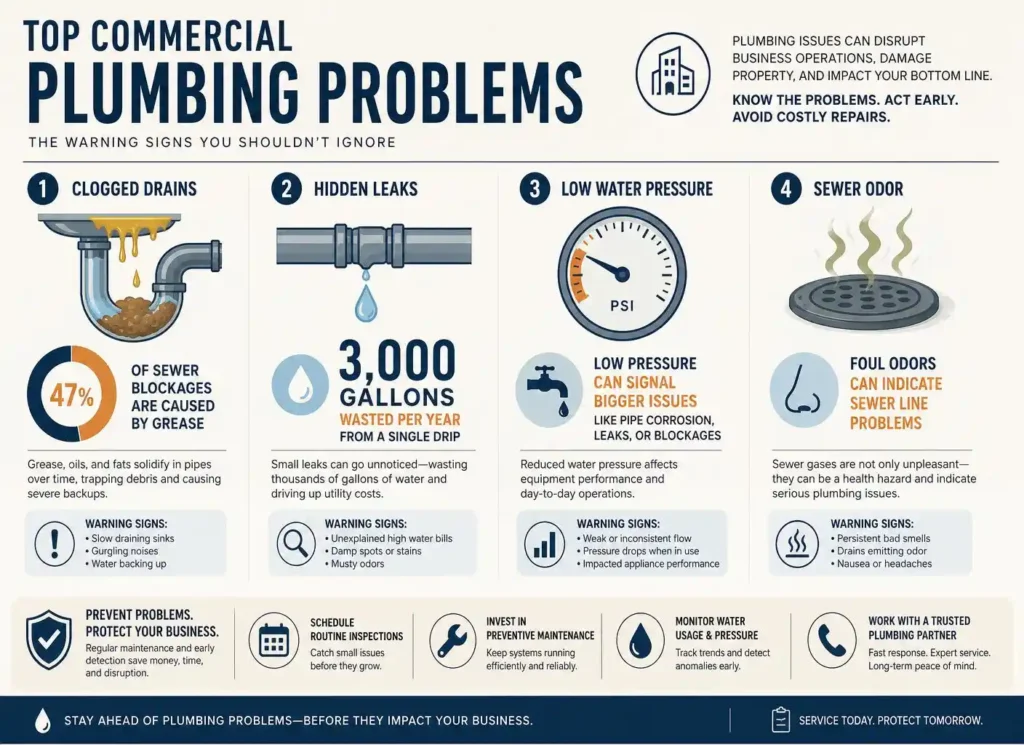
Clogged drains top the list of commercial plumbing problems. Restroom lines swallow wipes and paper towels all day while kitchen lines take on scraps and grease. The EPA ties grease buildup to about 47 percent of reported sewer blockages, and a bad backup can knock restrooms out for most of a working day.
Hidden leaks come next. A faucet dripping once per second wastes around 3,000 gallons a year. A pinhole leak inside a wall can run for months in a building where nobody checks for damp drywall. Low water pressure generates steady calls too, and the cause usually turns out to be scale buildup or a worn pressure regulator.
Warning signs worth a call:
- Drains that gurgle or empty more slowly every week
- Water pressure that dips during peak business hours
- A water bill that climbs with no change in usage, a classic sign of a hidden leak
- Sewer odor near floor drains or restrooms
Many of the same warning signs appear in residential kitchens too, and our guide on how to unclog a kitchen sink explains what causes these blockages and when it’s time to call a plumber.
Why Commercial Plumbing Maintenance Pays Off
Run the numbers, and prevention wins. Industry service data puts buildings on routine commercial plumbing maintenance at roughly 40 percent better efficiency and close to 90 percent lower failure risk. Weigh that against one day of closed restrooms. Or a health inspector in a flooded kitchen.
Buildings with maintenance staff on site do fine with two inspections a year. Quarterly visits work better for properties without that help. Either schedule costs a fraction of the emergency it prevents.
Conclusion
Commercial plumbing is not home plumbing with bigger pipes. The pressure is different. More users. Heavier demand. Stricter codes. Less room for mistakes. One slow drain can shut down a restroom. Weak water pressure can frustrate tenants, staff, or customers. A small leak can hide for days, then show up as damaged walls, lost business hours, and a repair bill no one wanted to see.
The best systems rarely get noticed because someone checks them before problems spread. If your building needs an inspection, has recurring drain issues, or keeps giving the same warning signs, do not wait for the next emergency. Our team works on commercial properties every week and can help you find the issue early. Reach out through our contact page (interlink: /contact/) before the problem grows too costly too quickly.
FAQs About Commercial Plumbing
What is the difference between commercial and residential plumbing?
Size, mostly. A commercial system feeds hundreds of users through heavier equipment under stricter codes. A residential system serves one family with standard parts. Break a pipe at home, and you mop the floor. Break one in a hotel, and you refund the rooms.
How frequently does a grease trap need cleaning?
Every one to three months for most kitchens. Many cities also follow the 25 percent rule, which calls for service once grease and solids fill a quarter of the trap. A packed kitchen can hit that line in weeks.
Does the law require backflow testing?
In most places, yes. Water districts require a certified test on every commercial backflow assembly once a year, and they want the paperwork. Let it lapse, and the fines start, then a shutoff notice if it drags on.