
Insurance data puts it at roughly one insured home in sixty filing a water damage claim every year. Most of those claims do not start with a storm. They start in the pipes. That plumbing runs behind the wall every hour of the day. No one gives it a thought, not until a line lets go and the ceiling below it stains brown. Know how the system works, and you get ahead of that.
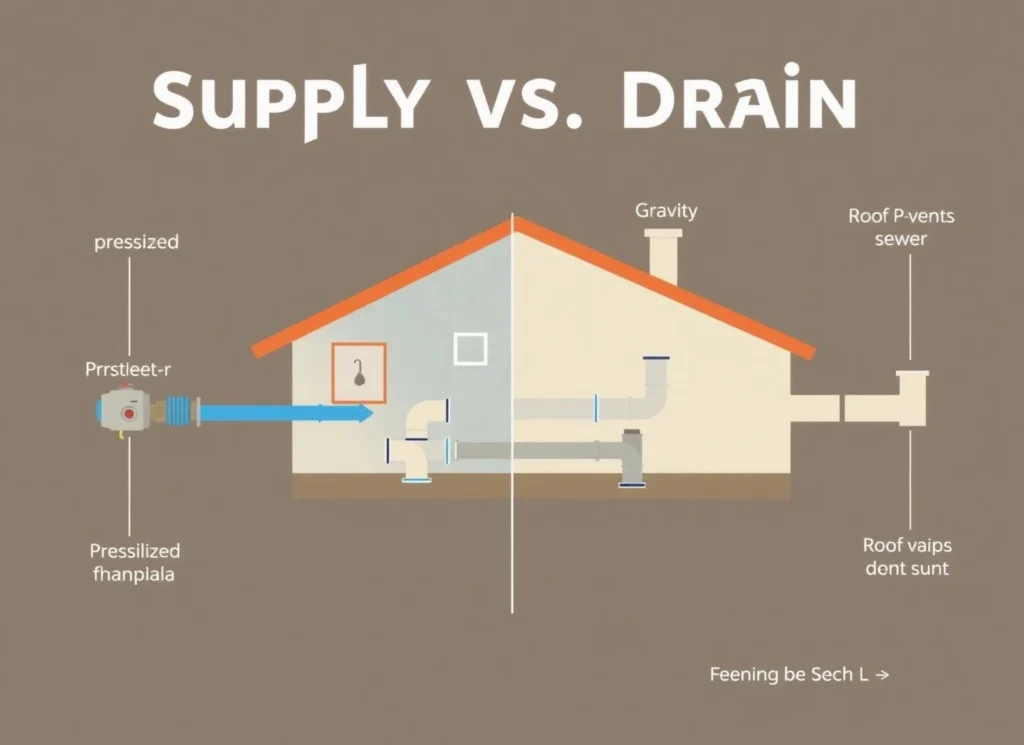
How does residential plumbing work? Two separate networks share the same walls. The first pushes clean water in under pressure. Gravity runs second, dragging used water back out toward the sewer. The rest of this page takes both sides apart and shows where each one gives out.
How Does Residential Plumbing Work
Trace how residential plumbing works, and you start at the street. One supply line feeds the whole house. It runs three-quarters of an inch to an inch wide and comes off the city main or a private well. Before it splits, the line passes a meter and a main shutoff valve. Cold water heads straight for the fixtures. A second branch peels off to the water heater, then runs hot lines in parallel across the house. For larger properties, commercial plumbing systems handle much higher water demand and more complex distribution needs.
Used water takes a different road out. Drain pipes tilt downhill toward a central stack and empty into the city sewer or a septic tank. No pump does the lifting in most homes. Gravity does all of it. That is why the pitch of every pipe matters so much.
The Pressurized Supply Side
City water shows up somewhere between 40 and 80 psi. That is enough push to reach a second-floor shower on its own. The pressure never lets up. It sits in the lines around the clock, which is exactly why a burst pipe can flood a room in minutes.
Most newer homes run supply water through copper or PEX. Older houses sometimes still carry galvanized steel, and that steel rusts from the inside until the flow drops and the water turns brown. A whole-home repipe ends the problem for good.
The water heater sits on the hot branch and feeds every tap that blends warm water. Tank models keep 40 to 50 gallons hot and ready. Tankless units skip the tank and heat on demand. This one appliance grinds harder than anything else on the supply side, and that workload keeps water heater repair near the top of the residential call list.
The Drain and Vent Side
Drainage looks basic. It hides the most exact engineering in the house. Every drain line drops about a quarter inch per foot. Steeper is not better. Too much slope lets the water race ahead of the solids, the solids stall in the pipe, and a clog starts to build.
A curved trap sits under every sink and inside every toilet, holding a small pool of standing water. That water is a seal. It stops sewer gas from creeping up into the room. Vent pipes tie the drain lines to open air through the roof. Drains flow clean that way, and falling water never siphons those traps dry.
A gurgle from the drain points to a venting fault more than a clog in the pipe you can see. Professional drain cleaning clears the buildup that slope and venting cannot stop on their own.
If you are unsure how often this maintenance should be done, our guide on how often to clean drains explains the recommended schedule for kitchens, bathrooms, and the main sewer line.
Two Systems Side by Side
The supply and drain networks solve opposite problems, and that split runs through every design choice. Here they are, side by side.
| Supply side | Drain side | |
| What moves the water | City pressure | Gravity |
| Direction | Into the house | Out to the sewer or septic |
| Common pipe | Copper or PEX | PVC or ABS |
| Built-in safeguard | Main shutoff valve | Traps and roof vents |
| First trouble sign | Pressure drop or damp spots | Slow drains and gurgling |
The two networks never touch. Plumbing code demands that separation.
What a Typical House Includes
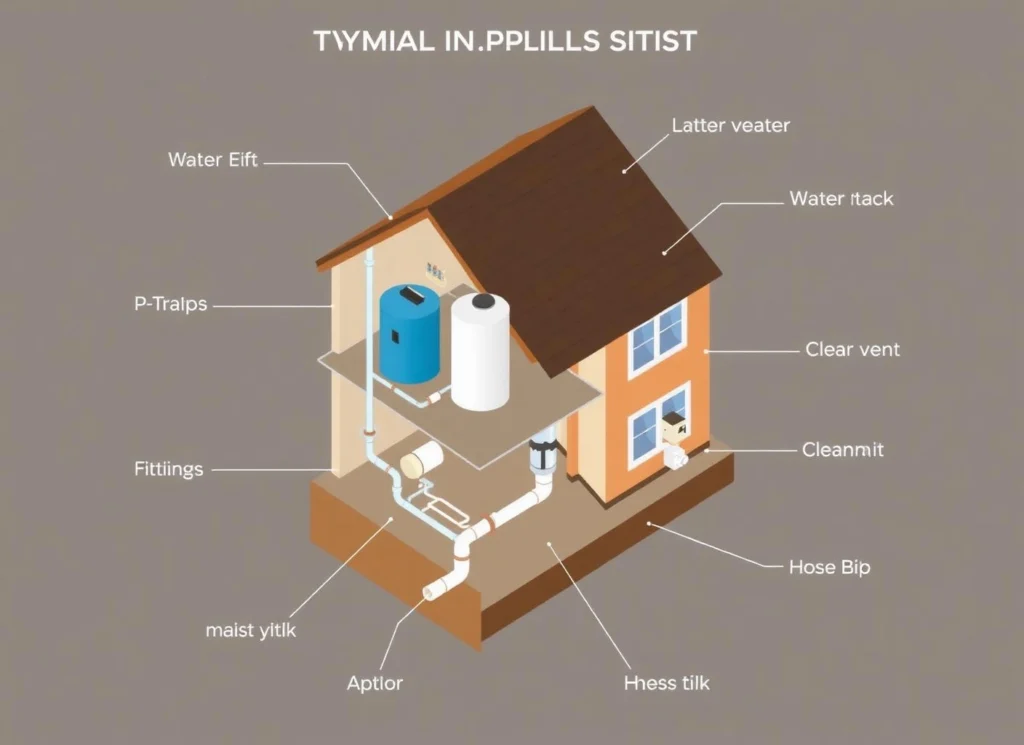
Layouts change from one home to the next. The core parts do not. A standard single-family house carries each of these.
- A main shutoff valve where the line enters the house
- A water heater on the hot supply branch
- A P-trap under every sink and tub
- A main drain stack tied to the sewer or septic line
- Vent pipes running out through the roof
- Cleanout fittings that give a plumber access to the drain lines
- Hose bibs on the exterior walls
Where Residential Plumbing Work Goes Wrong
Most residential plumbing work deals with the same short list of failures. Clogs top it. Kitchen lines throw the ugliest ones, because grease slides down warm and hardens deep in the pipe long after the pan is clean. A running toilet burns through up to 200 gallons a day, and the culprit is usually a worn flapper valve. Water heaters give out somewhere around the ten-to fifteen-year mark.
Hidden leaks cost the most. The average household drips away close to 10,000 gallons a year through bad fittings, and a slab leak can run for months before a single stain reaches the surface.
Who Should Handle the Work
Swapping a faucet or a toilet flapper is within reach for most homeowners. The boundary sits at anything hidden inside a wall or floor. Most cities require permits for plumbing work in a residential building that changes supply or drain lines, and anything touching gas or the water heater belongs to a licensed plumber. A bad joint inside a wall gives no warning until the drywall stains.
Final Thought
So that is how residential plumbing works. Pressure brings the water in. Gravity takes it back out. Every other part of the system exists to keep those two jobs apart and running.
Give both sides a little routine attention, and the house pays it back for decades. Skip it, and the house joins the water damage claims from the top of this page.
If a drain already runs slow or a fixture never quite shuts off, we handle residential calls like these every day. Reach us through the contact page, and we will track the problem back to its source.
If a drain already runs slow or a fixture never quite shuts off, understanding the plumbing camera inspection cost is a smart first step before moving forward with repairs.
FAQs About Residential Plumbing
What are the two main parts of a home plumbing system?
The supply side that pushes clean water in and the drain-waste-vent side that carries used water out by gravity. The two never meet. The trap under each fixture marks the border.
How does water reach the second floor?
City or well pressure does the work. A supply between 40 and 80 psi pushes water up two or three stories with no extra gear. A weak upstairs shower usually means a clogged aerator or a regulator on its way out, not the climb.
What keeps sewer gas out of the house?
The water gets trapped in every P-trap. That curved bend under each drain holds a seal that the gas cannot cross. A bathroom that smells of sewage after weeks unused has probably lost its trap water, and a minute at the tap brings the seal back.
How long do residential plumbing pipes last?
Copper supply lines go 50 years or more. PEX runs about 40 to 50. A PVC drain pipe can pass 75. Galvanized steel is the odd one out, since most of it went in before the 1970s and has already passed its life.