

A damaged sewer line used to mean one thing: a torn-up yard, a broken driveway, and weeks of mess. That is no longer the only option. Trenchless technology now lets plumbers fix a pipe through small access points instead of digging a long trench along its length.
Naturally, the first question most homeowners ask is about the trenchless sewer line repair cost compared to older methods. This guide explains how the pricing works, what affects it, and how our team at Drain Pros Ventura approaches the job.
The short answer: Most homeowners spend between $2,500 and $15,000 on trenchless sewer repair, depending on the method and how much pipe needs work.
Short spot repairs with lining sit at the low end. A full-line pipe bursting job sits at the high end. A camera inspection ($150–$450) comes first either way.
How trenchless sewer repair actually works underground
Trenchless repair fixes or replaces a damaged pipe without digging a full trench along its length. Instead, a plumber creates one or two small access points and works through the existing pipe path. There are two common methods.
- Pipe lining: A flexible liner coated in resin is inserted into the damaged pipe and expanded to form a new pipe within the old one.
- Pipe bursting: A new pipe is pulled through the old one while a bursting head breaks apart and pushes out the damaged material.
Both methods avoid large-scale digging, which is the main reason homeowners consider them despite a higher price tag per job. Before comparing costs, it’s helpful to understand how trenchless sewer repair works and why different repair methods vary in price.
Trenchless Sewer Line Repair Cost for pipe lining vs pipe bursting
Pricing depends on pipe length, depth, and the extent of damage, but here are typical ranges reported across the country.
| Service Type | Description | Typical Cost Range |
| Pipe lining, short section | Spot repair using CIPP | $2,500 – $5,000 |
| Pipe lining, full line | End to end relining of the lateral | $5,000 – $12,000 |
| Pipe bursting, short section | Replacing a damaged segment | $3,000 – $6,000 |
| Pipe bursting, full line | Full lateral replacement | $6,000 – $15,000 |
| Camera inspection | Always the first step | $150 – $450 |
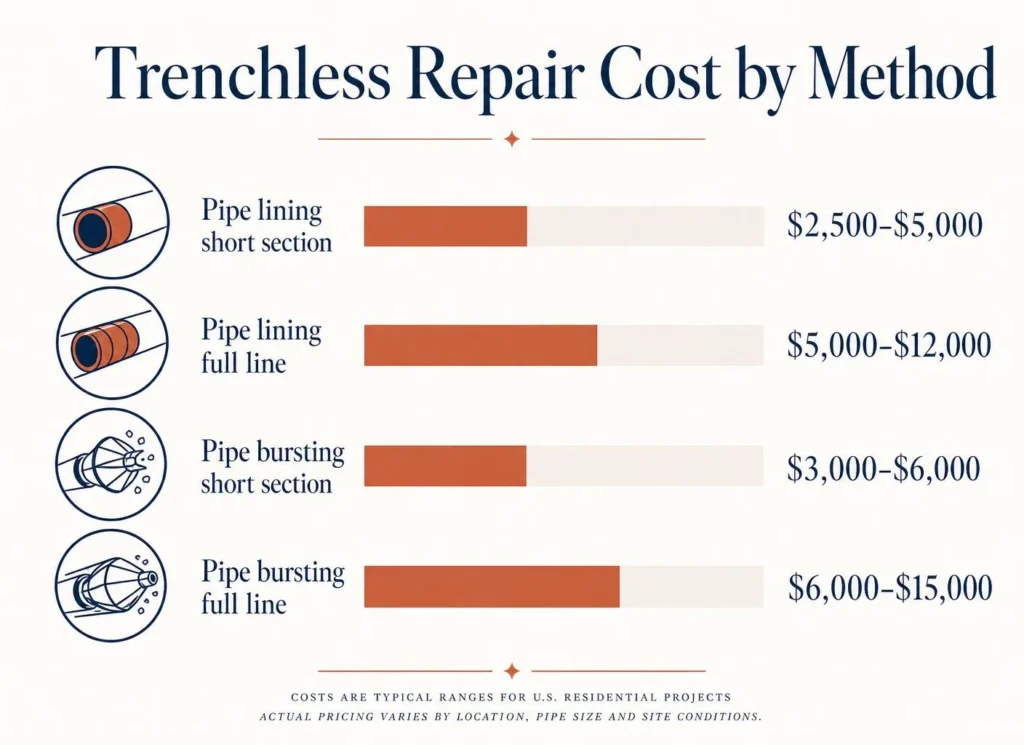
Most homeowners land in the middle of these ranges. A short spot repair with lining lands near the bottom; a full-length bursting job under a long driveway lands near the top.
Trenchless vs open-trench excavation: the real cost difference
Traditional excavation looks cheaper on paper, especially for shallow, short repairs. But the sticker price is only half the story. Once you add landscaping restoration, concrete or asphalt replacement, and haul-away, trenchless typically closes the gap or wins outright.
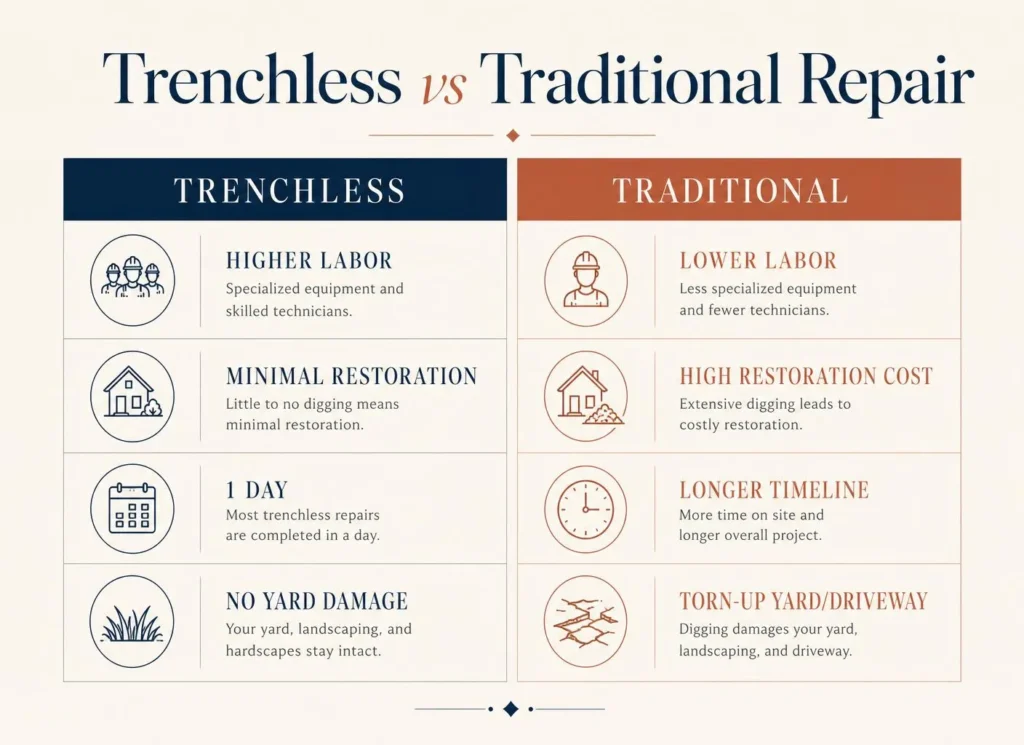
For homes with mature landscaping, finished basements, or hardscape above the pipe, trenchless almost always beats a full dig once restoration is added back into the traditional quote.
Factors that move your trenchless quote up or down
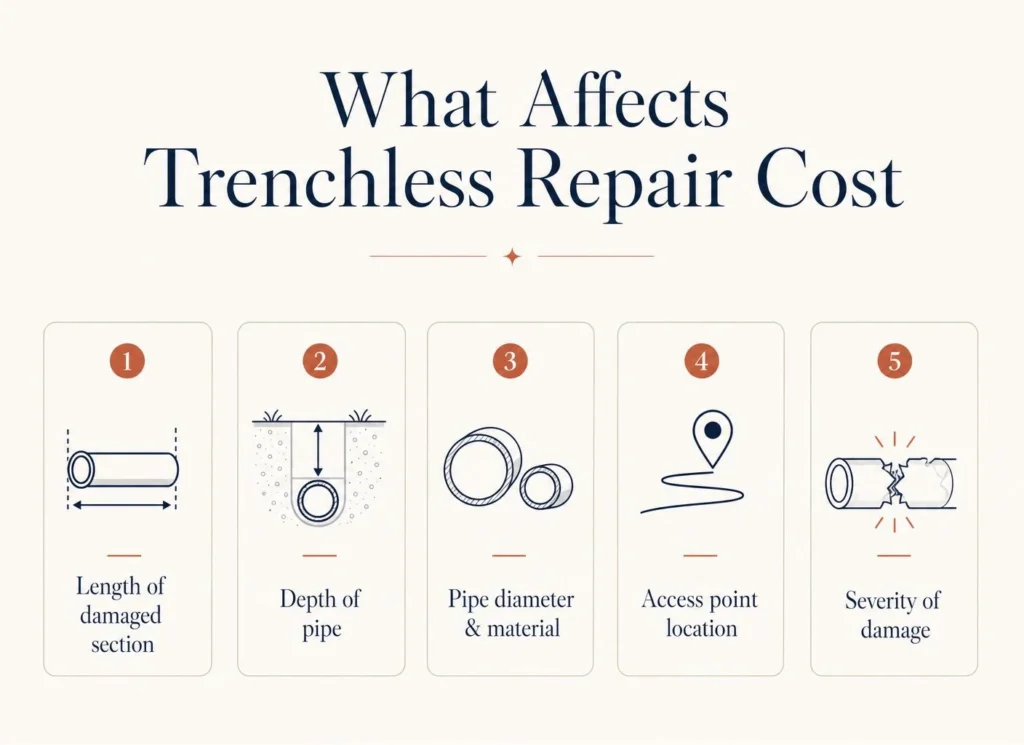
1. Length of the damaged section
A short spot repair using a liner costs far less than relining or bursting the entire sewer line from the house to the street connection.
2. Depth of the pipe
Pipes buried deeper require more preparation at the access points, which adds labor time even though the trenchless method itself avoids a long open trench.
3. Pipe diameter and material
Wider pipes and older materials like clay or cast iron sometimes need extra prep work before a liner or burst head can be used effectively.
4. Access point location
If access points sit under concrete or through a finished area, some minor excavation or cutting is still required, which adds a small amount to the total bill.
5. Severity of the damage
A pipe with a single crack is a simpler and cheaper fix than one with multiple breaks, a belly, or heavy root intrusion along its length.
Additional costs most trenchless quotes leave out
Even a well-scoped trenchless job usually carries add-ons beyond the headline number. Knowing what they are before you sign avoids the “why is this line item here?” phone call later.
| Service / Cost Item | Description | Typical Cost Range |
| Permits and inspection fees | Varies by city; Ventura County usually mid range | $100 – $800 |
| City tie in or cleanout install | Required when connecting to the municipal main | $500 – $2,500 |
| Interior plumbing repairs | Rerouting or replacing damaged branch lines | $300 – $2,000 |
| Septic to sewer conversion | Includes tank decommissioning and new lateral | $3,000 – $10,000 |
| Backflow preventer install | Highly recommended for low lying homes | $300 – $1,500 |
Camera inspection and locate
A pre-repair camera run ($150 – $450) is non-negotiable; it identifies the exact defect, distance from the cleanout, and depth. Some contractors credit the fee back if you book the repair; ask upfront.
Interior plumbing repairs
If the camera reveals a failing branch line under the slab or a broken vent stack, expect $300 – $2,000 in additional interior work on top of the lateral repair.
Switching from a septic tank to city sewer
Some Ventura-area homes still run on septic. If you’re already trenching for a new lateral, pairing the work with a septic abandonment ($3,000 – $10,000 total) is far cheaper than doing it later as a standalone project.
Backflow preventer install
For homes below street grade, common in older Ventura neighborhoods, a backflow preventer ($300 – $1,500) is cheap insurance against city-main backups pushing sewage into your fixtures.
Is trenchless repair worth it for your home?
For most homeowners, yes. The upfront number is higher than a shallow traditional dig, but the savings show up in places initial quotes rarely price out.
- No concrete, paver, or asphalt replacement above the pipe path
- No regrading, reseeding, or replanting damaged landscaping
- Most jobs wrap in a single day instead of a week.
- Minimal disruption to daily life during the repair
The new liner or HDPE pipe typically carries a 50-year manufacturer warranty.
Homeowners who value their yard, driveway, or mature trees usually find that trenchless protects those assets even at a higher initial price.
How to save on trenchless sewer replacement
Trenchless isn’t a discount product, but a few decisions can meaningfully lower the final invoice without cutting corners.
- Get an itemized camera inspection first; a spot liner may fix the whole problem for a fraction of a full replacement.
- Bundle nearby work (cleanout install, backflow preventer, septic abandonment) into the same mobilization instead of separate trips.
- Ask if the contractor credits the inspection fee against the repair; many do when you book same-day.
- Compare at least two written quotes that specify method, footage, permit handling, and warranty terms.
- Verify your homeowner’s insurance policy; some plans cover sudden sewer collapse but not gradual root damage.
- Schedule during the off-season (late fall through winter) when trenchless crews often have more flexible pricing.
How a licensed sewer pro builds your quote
A fair quote always starts with a camera inspection so the plumber can see the exact location, length, and severity of the damage rather than estimating blind. From there, they recommend lining, bursting, or a hybrid approach when only part of the line needs trenchless work.
At Drain Pros Ventura, we always run the camera first, then walk you through both trenchless and traditional options with clear pricing, so you can choose the method that fits your budget and your property.
Frequently asked questions
How long does trenchless sewer repair last?
A properly installed CIPP liner or a pipe-bursting replacement is designed to last 50 years or more, and most reputable plumbers back the work with a long-term warranty.
Is trenchless repair always cheaper than digging?
Not always on the raw invoice, but once you factor in landscaping, driveway, and hardscape restoration, trenchless usually comes out even or ahead, especially on longer runs.
How long does the job take?
Most residential trenchless repairs finish in a single day. Full-line pipe bursting on a long or deep lateral can stretch to two days.
Can every sewer line be repaired trenchlessly?
No. Fully collapsed pipes, severe bellies, or misaligned joints sometimes require partial excavation. A camera inspection is the only reliable way to know.
Does homeowners insurance cover trenchless repair?
Standard policies rarely cover the pipe itself, but many cover resulting water damage. A separate service-line endorsement can cover the repair; check your policy before assuming.
Final thoughts
Trenchless repair has changed the way homeowners deal with damaged sewer lines. Instead of choosing between a costly repair and a torn-up yard, trenchless methods offer a middle path that protects your property while fixing the actual problem underground.
Understanding the full trenchless sewer line repair cost, along with what drives that price up or down, puts you in a stronger position when you sit down with a plumber to review your options.
Drain Pros Ventura is ready to inspect your line, explain trenchless and traditional options in plain language, and help you choose the repair that makes the most sense for your home.