
It’s not only you; many don’t plan for this. The bowl fills up, the water sits there refusing to go anywhere! And the cupboard where the plunger should be has a mop bucket in it and nothing else.
Paper and waste make up most household clogs, and both give way under a bit of pressure and lubrication, which is the whole reason a kitchen cupboard can solve the problem. Working out how to unclog a toilet without a plunger is mostly about order, starting gentle and moving up to something mechanical only when you have to. There is a separate category, though: a clogged toilet that no plunger can clear; and those last sections cover how to tell one from the other.
Can You Unclog a Toilet Without a Plunger?
Yes, and knowing why makes the rest easier to follow. All a plunger does is drive water at the blockage. And then pull it back again, over and over, until the paper comes apart.
Dish soap, a kettle of hot water, or a toilet auger will get to the same place along a different road.
Where this falls down is with solid objects. A toy car, or a phone that slid out of a back pocket, is never going to soften, and no guide on how to unclog a toilet without plunger tools is going to help with that. Push harder, and the item simply travels further into the trap, which is where it becomes a plumber’s job.
Stop the Water Before You Try Anything
Toilet clogged, no plunger in sight? Water first, method second. Unclogging a toilet without a plunger gets messy in a hurry. And what goes over the rim usually finds the gap around the base, soaks into the subfloor, and sits there for months without anyone noticing.
- Leave the handle alone. That second flush on a blocked drain is what turns a clog into a flood.
- Reach behind the toilet for the shutoff valve and turn it clockwise until it stops.
- Still trickling in? Lift the tank lid and hold the flapper shut with your hand.
- Old towels around the base, gloves on, bucket within reach.
Which Method Works Best for Your Clog?
No single fix covers everything. Paper gives way to soap and heat, while something wedged down in the trap needs a tool that can physically reach it. This quick reference on how to unclog a toilet, no plunger needed, is a reasonable place to start.
| Clog Type | Best First Method | Typical Time |
|---|---|---|
| Too much toilet paper | Dish soap and hot water | 15 to 30 minutes |
| Waste and paper, slow drain | Baking soda and vinegar | 30 minutes to overnight |
| Clog near the drain opening | Wrapped wire hanger | 5 to 10 minutes |
| Stubborn clog in the trap | Toilet auger | 10 to 15 minutes |
| Wipes or a small object | Wet/dry vacuum or auger | 10 to 20 minutes |
How Do You Unclog a Toilet Without a Plunger? 7 Methods
The seven below all deal with how to fix a stopped-up toilet without plunger tools, using things that are already in the kitchen. Let’s learn about them all.
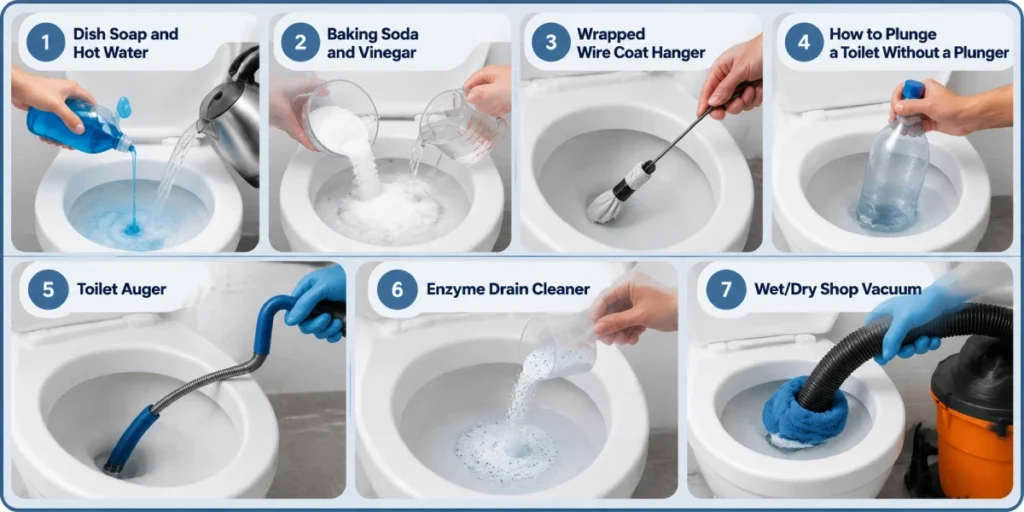
1. Dish Soap and Hot Water
It is the easiest way to unclog a toilet without a plunger. Pour half a cup into the bowl, then walk away for ten or fifteen minutes while it sinks and coats the blockage.
Heat a gallon of water in the meantime and pull it off the burner before it boils. Pour from waist height, because the drop is what gives the water its force when it hits. Then one flush, no more.
Avoid using boiling water, though. Porcelain does not care for sudden heat, and the wax ring underneath can soften enough to leak later.
2. Baking Soda and Vinegar
One cup of baking soda, followed by two cups of white vinegar poured slowly enough that the foam does not climb over the rim. Half an hour is the minimum. Although a drain that has been sluggish for weeks does far better if you leave it until morning and finish with hot water.
Think of this as how to fix a clogged toilet without plunger help for anyone who is not in a hurry. Wipes will ignore it completely. One warning worth repeating: bleach and store-bought openers stay out of the mix, because the New Jersey Department of Health warns that bleach and an acid such as vinegar release chlorine gas.
3. Wrapped Wire Coat Hanger
If whatever is blocking the drain sits just inside the opening, a coat hanger will reach it. It makes a sensible enough option for how to unblock a toilet without a plunger. Straighten the wire out, then wrap one end in a rag and tape it down so no bare metal touches the porcelain. Twist slowly once it is in. Firm resistance is your cue to stop rather than push.
4. How to Plunge a Toilet Without a Plunger
You can plunge a toilet without plunger hardware, and the usual stand-in is a 2-liter bottle with the base cut off and the cap left on. Press the open end into the drain hole and pump. The pressure it builds is close enough to the real thing, and it splashes, so keep your face well back.
5. Toilet Auger
Every plumber has a closet auger on the truck, and between them they clear more toilet clogs than every other hand tool combined. Short cable, stiff enough to push through, with rubber at the bend so the bowl comes through unmarked. Crank clockwise until the resistance gives way, then bring it back out slowly.
Of all the things worth owning for how to unclog a toilet without a plunger in the future, this is the one. Just do not substitute a sink snake, since the bare cable will leave scratches.
6. Enzyme Drain Cleaner
Enzyme cleaners are slow. That is the price of being gentle on pipes. And for a household that needs to unclog a toilet, no plunger around, with a spare bathroom to use in the meantime, slow is fine. Pour the dose on the label at night, flush in the morning. Most brands are labeled septic-safe, which is worth a look if the house is not on a city sewer.
7. Wet/Dry Shop Vacuum
A wet/dry shop vacuum can pull a clog back out of the drain, which sounds unlikely until you have seen it work. Wet/dry only, though. A household vacuum meeting water is a genuine hazard. Bail most of the bowl into a bucket, feed the hose in, and pack a towel around it so the seal holds.
This is the last of the home options for how to fix a clogged toilet without a plunger, and the hose needs disinfecting afterward.
Mistakes That Make a Clog Worse
Shortcuts are tempting when you unclog a toilet without plunger tools, and they account for most of the damage that turns a small job into an expensive one. Cracked bowls. Pipes eaten from the inside. Nearly all of it comes back to these four.
- Pouring boiling water straight into a porcelain bowl
- Reaching for a harsh chemical drain opener
- Mixing any cleaner with bleach
- Flushing again and again to see whether it has cleared
How to Unclog a Toilet If the Plunger Does Not Work
Finding the plunger does not always settle things, and fairly often the plunger is the reason nothing happens. The flat cup sort belongs under a kitchen sink. Toilets need a flange plunger, the one with the rubber sleeve that folds out and seals into the drain itself.
Then there is depth. Anything past the trap is simply out of a plunger’s reach, and the auger takes over from there. Then there is depth. Anything past the trap is simply out of a plunger’s reach, and the auger takes over from there. If your toilet still won’t flush properly, understanding the common reasons your toilet won’t flush can help you identify the underlying problem.
A toilet that behaves for a day and blocks again is telling you the trouble sits further along the line.
Signs the Clog Is in Your Main Sewer Line
Are several toilets clogged? No plunger or home remedy is going to clear a main sewer line. Timing is what gives it away, because when more than one fixture starts misbehaving at the same hour, the blockage is downstream of all of them. Roots are the usual culprit in older neighborhoods.
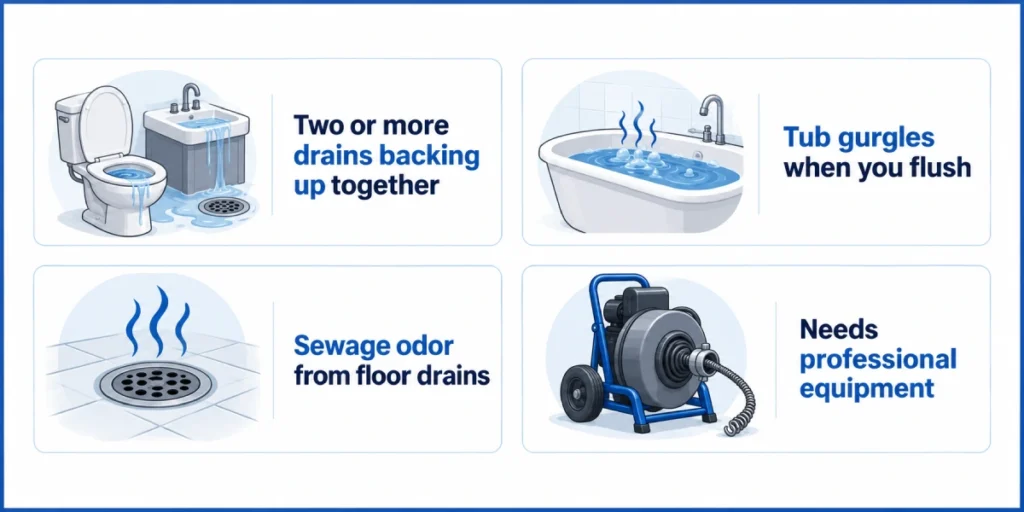
- Two or more drains backing up together
- A gurgle from the tub every time you flush
- Sewage odor drifting up from floor drains
At that depth, the job needs professional equipment.
How to Prevent Future Clogs
Most of this comes down to what goes into the bowl in the first place. The U.S. Environmental Protection Agency recommends flushing nothing but human waste and toilet paper, which puts wipes and paper towels in the trash where they belong. Three habits head off most repeat call-outs.
- A lidded bin beside every toilet
- Less paper per flush on low-flow models
- A flange plunger and closet auger kept in the bathroom cupboard
Toilet Clogged Without a Plunger? Your FAQs Answered
A clogged toilet doesn’t always require a plunger or an immediate call to a plumber. From simple household methods to overnight solutions, these FAQs explain what you can try safely, how long to wait, and which common drain-cleaning products are best avoided.
How Do I Unclog a Toilet Without a Plunger Fast?
Dish soap, then hot water. Nothing at home works quicker on paper clogs, which usually loosen within 15 to 20 minutes. Two rounds with no change, and it is time for the auger.
How to Unstop a Toilet Without a Plunger Overnight?
Baking soda and vinegar last thing at night, or an enzyme cleaner if there is one in the house, then leave the bathroom alone until morning. One flush after waking normally does it.
Is It Safe to Use Chemical Drain Cleaner in a Toilet?
Most plumbers say no, and for good reason. The opener just sits in the bowl while the clog holds, ready to splash back the moment you try something else, and older pipes take damage from it as well.
Final Thoughts
Patience and the right order clear most household clogs. What changes, once you know how to unclog a toilet without a plunger, is the panic level rather than the work involved, since an overflowing bowl is really just a half-hour job with soap, hot water, and some waiting. Stop when the signs point further down the line.
Clogs that keep coming back are the ones with a cause behind them. Across Ventura County, the San Fernando Valley, and Santa Clarita, Drain Pros Ventura covers drain cleaning and toilet repairs, and a licensed plumber can trace the source before the next backup arrives.