
Ever stopped to wonder where the water actually goes after you flush? Most people don’t, not until a toilet backs up or a drain won’t clear, and suddenly it’s all you can think about. Underneath every street and yard, there’s a network of pipes handling that job round the clock, quietly moving everything from bathwater to sewage without anyone ever noticing.
This guide covers:
- How a sewer system actually works, step by step
- The different types of sewer systems for homes
- What happens during treatment, and how a sewage system works once wastewater arrives
- Common problems, and how to keep your line in shape
Whether you’re dealing with a slow drain right now or just curious about what’s under your street, here’s everything worth knowing.
What Is a Sewer System?
Boil it down, and a sewer system is just pipes underground, moving wastewater to a place where it can get treated. That’s the gist of it, in one sentence. But there’s a lot happening behind that sentence: pipes, pumps, lift stations, treatment plants, all quietly doing their job, mostly invisible until they’re not.
What’s actually running through those pipes, though? Not clean water, that’s for sure. Soap, grease, food scraps, detergent, human waste- whatever ends up going down a drain in your house eventually flows through this network. Skip treatment, and that mix starts contaminating soil, groundwater, and rivers pretty fast. So a sewer system isn’t really a convenience thing. It’s more of a quiet, constant effort to protect public health and the environment.
Quick side note on terminology, since people mix these up all the time: sewer system, sewage system, sewerage system. They sound interchangeable, but they’re not quite. A sewer system usually means the physical pipes. A sewage system leans toward the treatment side: what happens to waste once it’s been collected. A sewerage system covers both pipes and process, under one umbrella term. Nobody’s going to correct you over coffee for mixing these up, but it helps when you’re trying to pinpoint where an actual problem is coming from.
How Does a Sewer System Work?
There’s a fairly predictable route wastewater takes once it leaves your house. Break it into steps, and it stops feeling like some mysterious black box.
- It starts inside your home or business. Flush a toilet, run the sink, take a shower, throw in a load of laundry, and that water’s already moving through your internal plumbing.
- Then it reaches your private lateral line. That’s the pipe connecting your property to the public system outside. Depending on where you live, part of that line might actually be your responsibility to maintain.
- From there, it joins the public sewer main. Your lateral feeds into a much bigger pipe running under the street, shared with your whole block. This is essentially what people mean by “city sewer system” or “municipal sewer system.”
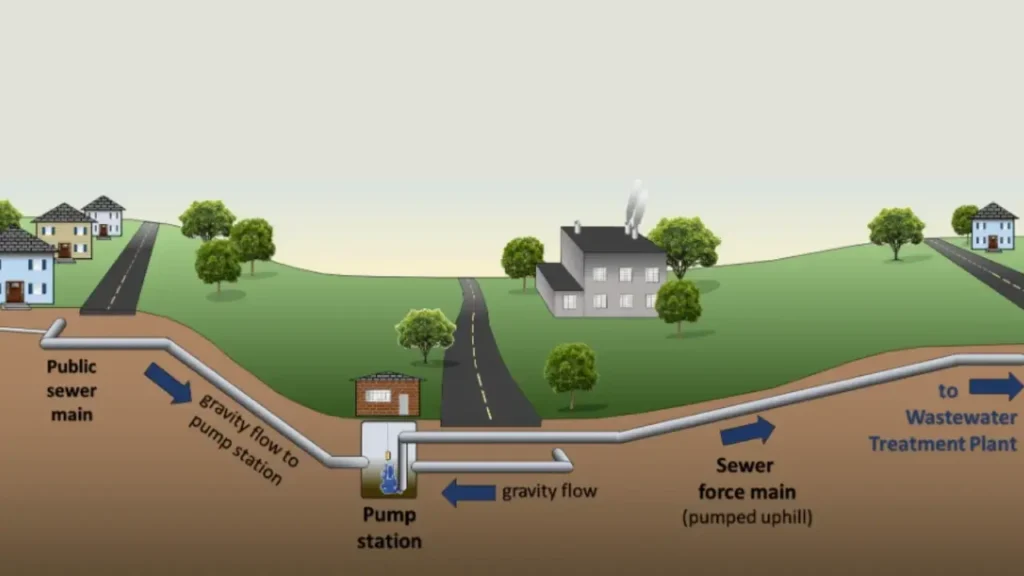
- Gravity takes over from here, mostly. Sewer mains sit on a gentle downward slope, so water just flows toward treatment on its own. That gravity-driven setup is part of why folks call it an underground sewage system, or sometimes an underground sewerage system. Where the land’s too flat, lift stations use pumps to push water uphill instead.
- Eventually, it lands at a treatment plant. Once there, wastewater runs through several stages built to strip out solids, bacteria, and other contaminants before anything gets released back out.
- Finally, the treated water goes somewhere. Depending on the facility and local rules, it might flow into a nearby waterway, or get reused entirely for irrigation and other non-drinking purposes.
It reads simply enough on paper. Keeping that whole chain functioning day after day, though, takes a lot of infrastructure staying in decent shape. A public sewer system running under an entire city obviously has far more moving parts than your house’s plumbing, which is exactly why municipal maintenance budgets matter as much as they do.
Not All Sewer Systems Are Built the Same
There are a few different types of sewer systems for homes and cities, and figuring out which one you’re actually connected to saves a lot of headaches later.
- Sanitary sewer systems handle wastewater only: toilets, sinks, showers, and appliances. Most newer neighborhoods are built this way on purpose, keeping wastewater completely separate from rainwater. Come across the phrase “what is sanitary system” somewhere? That’s basically it: a network built specifically for household and business wastewater, not runoff.
- Storm sewer systems are an entirely different network, meant for rain and runoff coming off streets, roofs, and parking lots. A storm sewer system, sometimes called a sewer drainage system, usually empties into local waterways with barely any treatment, since it’s not carrying the same level of contamination sewage does.
- Combined sewer systems run both stormwater and sanitary wastewater through the same pipes. These are mostly found in older cities, built before separate systems became the norm. The real downside: heavy rain can overwhelm a combined system fast, sometimes triggering overflows that send untreated wastewater straight into the environment.
Knowing which of these types of sewer systems for homes you’re hooked up to actually matters, mostly because it changes how you should react when something goes sideways. A sanitary line backing up and a storm sewer system flooding are two completely different emergencies. Treat them the same, and you’re just wasting time.
The Key Parts of a Sewer System
A handful of components show up in nearly every sewer system, whether it’s a small residential setup or a sprawling municipal sewer system running under an entire city.
- Building sewer or lateral line: Your private pipe connecting to the public sewer network.
- Sewer main: The larger public pipe collecting wastewater from multiple properties, the backbone of the local city sewer system.
- Manholes: Access points along the main used for inspection, maintenance, and clearing blockages.
- Lift stations: Pumps that push wastewater uphill wherever gravity alone can’t cut it.
- Cleanouts: Access points on your own property, letting a plumber reach the lateral line without digging up your entire yard.
- Treatment plant: Where wastewater finally gets processed before it’s discharged or reused.
What Happens During Wastewater Treatment
Once wastewater arrives at a treatment facility, it typically runs through a handful of stages. This part is really the heart of any sewage system, where contaminated water actually becomes something safe to release or reuse.
- Primary treatment is mostly a physical process, separating solids from liquid. Screens and settling tanks grab the bigger debris right away and let heavier solids sink to the bottom of the tank.
- Secondary treatment brings bacteria and other microorganisms into the picture to break down whatever organic matter is still floating around. This stage is doing most of the actual cleaning, honestly.
- Tertiary treatment, when a plant even runs it, tacks on an extra filtration or disinfection step- chlorine, UV light, that kind of thing- to kill off whatever pathogens are still lingering before the water’s discharged or reused.
Not every treatment plant runs every stage the same way. It depends a lot on local regulations and what a given facility is actually equipped to handle. Bigger sewerage systems serving major cities usually pack far more advanced treatment capacity than smaller rural sewage systems tend to.
How Do Sewer Systems Work Differently in Cities vs. Rural Areas?
Fair question. The honest answer: quite a bit, depending on where you’re standing. A municipal sewer system in a dense city leans heavily on gravity, backed up by a network of lift stations, to move huge volumes of wastewater toward one centralized treatment plant, day after day. Rural properties are often a different story entirely, not connected to any public sewer system at all. Instead, they usually rely on septic tanks, which basically function as a private, small-scale sewage system that treats waste right there on the property instead of shipping it miles away.
Suburban areas tend to land somewhere in the middle. Connected to a public sewer system, sure, but sometimes served by smaller, localized treatment facilities rather than one massive city-wide plant handling everything. Not sure which category your own property falls under? A quick call to your local water authority or a look at property records usually clears it up.
Common Problems That Show Up in Sewer Systems
Even a well-built, well-maintained sewer system runs into trouble now and then. A handful of usual suspects keep coming up.
- Tree roots: They chase moisture instinctively and work their way into pipes through tiny cracks or loose joints, eventually causing blockages or full-on breaks.
- Grease buildup: Pour grease down a drain enough times, and it hardens, narrowing the pipe bit by bit. Genuinely one of the most common causes of clogs out there.
- Aging infrastructure: Older pipes, clay, cast iron, whatever the material, tend to crack, corrode, or collapse as the decades pile up.
- Inflow and infiltration: Rain or groundwater sneaking into the sanitary sewer through damaged pipes or bad connections, piling on a load the system was never designed to carry.
- Debris blockages: Wipes, paper towels, anything that isn’t actually flushable, remain a leading cause of backups in both home plumbing and bigger municipal lines.
How to Keep Your Sewer System in Good Shape
A little regular upkeep now genuinely saves a lot of money and hassle later on.
- Get your sewer line inspected every so often, especially if it’s an older home or there’s a history of root problems.
- Never pour grease, oil, or fat down any drain.
- Stick to flushing toilet paper only, and skip the wipes even when the label insists they’re “flushable.”
- Pay attention to early warning signs- slow drains, gurgling, backups that keep coming back- and deal with them before they turn into something bigger and costlier.
- Know exactly where your cleanout is. It makes future repairs faster and cheaper for everyone involved.
Frequently Asked Questions About Sewer Systems
Still have questions about how sewer systems work? Here are answers to some of the most common questions about sewer lines, backups, wastewater treatment, maintenance, and the difference between private and public sewer systems.
What should I do if sewage starts backing up into my house?
Stop using the affected plumbing fixtures and contact a professional for sewer services as soon as possible. Running more water into a blocked line can make the backup worse.
Why do combined sewer systems overflow so often during storms?
Because stormwater and wastewater share the exact same pipes, heavy rain can push the whole thing past capacity, forcing untreated overflow directly into nearby waterways.
Am I responsible for repairs to the public sewer main?
Usually not, though the lateral line itself is often at least partly your responsibility as the property owner. It varies by municipality, so it’s worth a quick call to your local water authority to confirm.
What’s the actual difference between a sewer main and a lateral line?
The lateral is your private pipe running from your property outward. The main is the larger public pipe under the street serving multiple properties, part of the wider municipal sewer system.
How often should you get a sewer line inspected?
Most professionals suggest a camera inspection every couple of years, or sooner if you’re dealing with slow drains or backups that keep coming back.
How does a sewer system work, in simple terms?
Wastewater leaves your home through internal plumbing, travels through a private lateral line into the public sewer main, then flows, mostly by gravity, toward a treatment plant where it’s cleaned before discharge or reuse.